10/13/13

On Baptism – Patrum Apostolicorum (Apostolic Fathers)

De Baptismo
 - The Adversaries - Part I
 - The Adversaries - Part II
 - The Apostolic Apostolic Fathers

This is my last post on the Apostolic Fathers which will consider the affirmative statements they made concerning baptism and infant baptism. The various statements show that the credobaptist arguments were never used, and while they did debate baptism, it was never whether it was efficient. There have been certain periods where a Tertullian-type view of baptism were prevalent, but they always understood that baptism saved and was for children as much as adults.

Polycarp
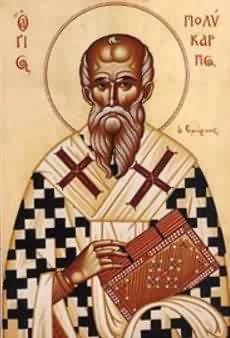
Polycarp is understood to be a disciple of the apostle John and he served as the bishop of Smyrna which was a church in Asia. This was also one of the seven churches mentioned by John in the Book of Revelation. According to The Martyrdom of Polycarp he is recorded as stating:
“Eighty and six years have I served Him, and He never did me any injury: how then can I blaspheme my King and my Saviour?”
While this is not a statement on baptism, he does indicate he has served Christ 86 years of his life. This would suggest Polycarp was baptized around 80 C.E. I am not trying to suggest that Polycarp is speaking explicitly to infant baptism, but rather if Polycarp is understood in light of the whole than it should be evident that it was likely speaking to a very early baptism.

Irenaeus
Irenaeus was born in Smyrna and was known to be a disciple of Polycarp (who was also a disciple of John). He was a bishop in modern day Lyon, which was part of Gaul. He died at the start of the third century. He was known for his writings against heresy. If infant baptism was a heresy he never spoke against it. Let's consider
“For He came to save all through means of Himself— all, I say, who through Him are born again to God — infants, and children, and boys, and youths, and old men. He therefore passed through every age, becoming an infant for infants, thus sanctifying infants; a child for children, thus sanctifying those who are of this age, being at the same time made to them an example of piety, righteousness, and submission; a youth for youths, becoming an example to youths, and thus sanctifying them for the Lord. So likewise He was an old man for old men, that He might be a perfect Master for all, not merely as respects the setting forth of the truth, but also as regards age, sanctifying at the same time the aged also, and becoming an example to them likewise.”
Against Heresies, 2.22.4
For the Church Fathers it is clear that baptism saves, and thus statements of saving should be understood in this context. He states "He came to save all through means of Himself— all, I say, who through Him are born again to God — infants, and children, and boys, and youths, and old men." Then goes on to say Christ comes for and sancties these different groups. I must repeat that for the Early Church salvation and baptism were inseparable, thus, it is proper to see this as a reference to baptism. This is further enforced by reference to the statement "born again to God ...sanctifying them ...". Let us continue.
“Thus there are as many schemes of redemption as there are teachers of these mystical opinions. And when we come to refute them, we shall show in its fitting-place, that this class of men have been instigated by Satan to a denial of that baptism which is regeneration to God, and thus to a renunciation of the whole [Christian]faith.” Against Heresies, I.21.1
"‘And [Naaman] dipped himself . . . seven times in the Jordan’ [2 Kgs. 5:14]. It was not for nothing that Naaman of old, when suffering from leprosy, was purified upon his being baptized, but [this served] as an indication to us. For as we are lepers in sin, we are made clean, by means of the sacred water and the invocation of the Lord, from our old transgressions, being spiritually regenerated as newborn babes, even as the Lord has declared: ‘Except a man be born again through water and the Spirit, he shall not enter into the kingdom of heaven’ [John 3:5]" (Fragment34 [A.D. 190]). 
It is important to consider these statements for they enforce the fact that the Early Church, or at least Irenaeus understand baptism and salvation to be an act of God, one and the same.

Ignatius
Ignatius was a headstrong bishop of Antioch who seemed almost excited as he traveled to Rome to be executed. He does not speak explicitly to infant baptism but he does speak to the efficiency of baptism. He states the following:
Let my spirit be counted as nothing for the sake of the cross, which is a stumbling-block (1 Corinthians 1:18) to those that do not believe, but to us salvation and life eternal. Where is the wise man? Where the disputer? (1 Corinthians 1:20) Where is the boasting of those who are styled prudent? For our God, Jesus Christ, was, according to the appointment of God, conceived in the womb by Mary, of the seed of David, but by the Holy Ghost. He was born and baptized, that by His passion He might purify the water.
The Epistle of Ignatius to the Ephesians, 18
“Let none of you be found a deserter. Let your baptism endure as your arms; your faith as your helmet; your love as your spear; your patience as a complete panoply. Let your works be the charge assigned to you, that you may receive a worthy recompense. Be long-suffering, therefore, with one another, in meekness, as God is towards you. May I have joy of you for ever!”
The Epistle of Ignatius to Polycarp, Chapter 6
“…baptism, which is administered that we should have fellowship with the death of the Lord.”
Epistle to the Philippians, Chapter 1
Igantius' view of baptism is consistent with the other Early Church Fathers. This should be remembered since it affirms the universality (catholicity) of the doctrine of baptism.

Shepherd of Hermas
The Shepherd is another father who does not speak to infant baptism, but does say some powerful things about baptism. He writes:
And I said to him, I should like to continue my questions. Speak on, said he. And I said, I heard, sir, some teachers maintain that there is no other repentance than that which takes place, when we descended into the water and received remission of our former sins. He said to me, That was sound doctrine which you heard; for that is really the case. For he who has received remission of his sins ought not to sin any more, but to live in purity.
Sheperd of Hermas, Book 2. CH III
“Explain to me a little further, sir, I said. What is it that you desire? he asked. Why, sir, I said, did these stones ascend out of the pit, and be applied to the building of the tower, after having borne these spirits? They were obliged, he answered, to ascend through water in order that they might be made alive; for, unless they laid aside the deadness of their life, they could not in any other way enter into the kingdom of God. Accordingly, those also who fell asleep received the seal of the Son of God. For, he continued, before a man bears the name of the Son of God he is dead; but when he receives the seal he lays aside his deadness, and obtains life. The seal, then, is the water: they descend into the water dead, and they arise alive. And to them, accordingly, was this seal preached, and they made use of it that they might enter into the kingdom of God.”
Shepherd of Hermas, Book III.Chapter 16
Origen
Origen was born to Christian parents around 185 (near Alexandria, Egypt). He does speak explictly to the doctrine of infant baptism. Now there are some Baptists who may like to point out that centuries after Origen's death he was condemned a heretic, and this is true, but they must remember their (misplaced) hero Tertullian was also condemned a heretic. Their failings do not take away from the apostolic teachings concerning baptism. Origen writes:
I take this occasion to discuss something which our brothers often inquire about. Infants are baptized for the remission of sins. Of what kinds? Or when did they sin? But since "No one is exempt from stain," one removes the stain by the mystery of baptism. For this reason infants are baptized. For "Unless one is born of water and the Spirit he cannot enter the kingdom of heaven."
Homily on Luke 14:5
In his Commentaries on Romans, 5:9, he argues that this “usage” came from the apostles. “The Church received from the apostles the tradition of giving baptism even to infants.” In context:
The Church received from the apostles the tradition of giving baptism even to infants. The apostles, to whom were committed the secrets of the divine sacraments, knew there are in everyone innate strains of [original] sin, which must be washed away through water and the Spirit"
Commentaries on Romans 5:9
He says in his Homily on Leviticus, 8.3, “In the Church, baptism is given for the remission of sins, and, according to the usage of the Church, baptism is given even to infants.” In context:
"Every soul that is born into flesh is soiled by the filth of wickedness and sin. . . . In the Church, baptism is given for the remission of sins, and, according to the usage of the Church, baptism is given even to infants. If there were nothing in infants which required the remission of sins and nothing in them pertinent to forgiveness, the grace of baptism would seem superfluous"
Homilies on Leviticus 8:3
If what Origen says is true then the doctrine of infant baptism and baptismal regeneration are apostolic in origen [sic] (... I mean origin). While the previous fathers do not explicitly speak to infant baptism, they all unanimously speak to baptismal regeneration. Infant baptism necessarily follows out of the teaching if baptismal regeneration.

Apostolic Tradition (Hippolytus of Rome)
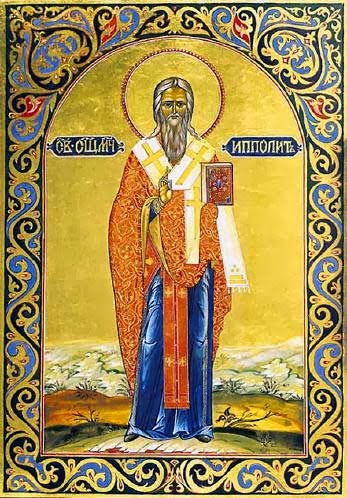
The Apostolic Tradition has been tentatively dated to around 215. This anonymous work is believed to have been written by Hippolytus of Rome. It is a very early writing. In chapter 21.4, Hippolytus teaches:
“The children shall be baptized first. All of the children who can answer for themselves, let them answer. If there are any children who cannot answer for themselves, let their parents answer for them, or someone else from their family.”
Apostolic Tradition, 21.4
 Yet again we see a clear teaching that children do receive the gifts of baptism. This gift is also a washing of regeneration for children as well as adults.

Cyprian
Cyprian was born in 200 AD and died in 258, this places his writings in the same timeframe as the other fathers. Interestingly, he was a disciple of Tertullian in Carthage. Tertullian was adament that baptism be delayed for the safeguard of the children, but in the era of Cyprian they returned to the apostolic doctrine and were debating whether to follow the tradition of the Jews or to baptize children right away. Cyprian is speaking on behalf of his presbytery and writes:
"As to what pertains to the case of infants: You [Fidus] said that they ought not to be baptized within the second or third day after their birth, that the old law of circumcision must be taken into consideration, and that you did not think that one should be baptized and sanctified within the eighth day after his birth. In our council it seemed to us far otherwise. No one agreed to the course which you thought should be taken. Rather, we all judge that the mercy and grace of God ought to be denied to no man born"
Letters 64:2 [A.D. 253]
He does not believe that baptism should be delayed until the eighth day, but should be administered immediately.
"If, in the case of the worst sinners and those who formerly sinned much against God, when afterwards they believe, the remission of their sins is granted and no one is held back from baptism and grace, how much more, then, should an infant not be held back, who, having but recently been born, has done no sin, except that, born of the flesh according to Adam, he has contracted the contagion of that old death from his first being born. For this very reason does he [an infant] approach more easily to receive the remission of sins: because the sins forgiven him are not his own but those of another"
ibid., 64:5
It is interesting that his opposition Fidus does not argue like Tertullian but instead appeals to the tradition of the Jews that baptism (like circumcision) be adminsitered on the eigth day. There is a clear parallel between circumcision and baptism. Cyprian is not speaking on behalf but of an entire group of priests at this local council in North Africa. When Cyprian's teacher Tertullian argued for delayed baptism he did so in the context of an already well-established practice. Hence, infant baptism was a part of North Africa for quite some time.

Conclusions
What conclusions can be reached by the statements of the Early Chuch Fathers? Two very strong conclusions must be accepted. The first is without question: the Early Church Fathers unanimously understand baptism to be a saving act of God. This is without question according to the wealth of writings we have from the fathers. The second is that arguably infant baptism is indeed the practice of the apostles which was passed down. This can be inferred by two strong points. The first is that the Church Fathers understood baptism to be something that was administered for the remission of sins. In other words it was a saving act for sinners. Unless someone is willing to argue in favour of Pelagius that children are not sinners, then it seems proper to give them the monergistic and gracious means of grace.

The next powerful point is that in and around 100 to 150 years after the death of the apostles there is testimony from Asia Minor (Smyrna), France (Gaul), Egypt (Carthage), and Rome that explictly speaks to infant baptism as a practice of the apostles. There is such a wide berth between these testimonies that if infant baptism was a heresy, it was the greatest heresy to ever befall the Christian Church. All Christians understood baptism to be a saving act and within 100 years from Egypt to Asia Minor to Rome and as far as France the Christian Church was already influenced with no recorded opposition. Secondly, despite the fact the Church was always on the offensive to fight the various heresies that emerged there was absolutely zero opposition to infant baptism. Infant baptism was only seriously questioned by the Anabaptists, and prior to this it was nearly universally practiced and confessed.

I must consider Christ's words to St. Peter: "And I say also unto thee, That thou art Peter, and upon this rock I will build my church; and the gates of hell shall not prevail against it."

Christ most certainly did not leave her bride in darkness for 1500 years.

10/12/13

On Baptism – The Adversaries - Part II

De Baptismo
 - The Adversaries - Part I
 - The Adversaries - Part II
 - The Apostolic Apostolic Fathers

Wow. I have been quite busy this past month, but I thought I would take some time tonight meditating on the topic of baptism.

My first post was titled On Baptism: The Adverseries. The purpose was to address the alleged adverseries which opposed the apostolic doctrine of infant baptism. The post considers the opinions of Tertullian who according to many Baptists is the most out-spoken 'credo-baptist' of his era, but if one takes the time to thoroughly read Tertullian in the context of his writings it becomes apparent he did not adhere to a credo or anabaptist view of baptism, but rather a modified and pragmatic view of the sacrament in light of and in fear of apostasy.

The following post will continue where we left on and address the teachings of Justin Martyr. He is often cited by Baptists in favour of their teaching. The truth is that his letters need to be understood in the context of his vocation which was an evangelist/apologist. As such he was neither a pastor nor a bishop and his concern was not shepherding a flock but engaging the Pagan religions/philosophies of the Greco-Roman world. The reason this is important is because as an apologist he is addressing those outside the faith, while pastors address the faithful and their families. When you finish reading it should be clear in the context of what Justin taught baptism does and his vocation that he also adhered to an apostolic view of baptism, namely, that it saves and is for children as well as adults.

Justin Martyr
“And many, both men and women, who have been Christ's disciples from childhood, remain pure at the age of sixty or seventy years; and I boast that I could produce such from every race of men.” First Apology, Chapter 15.
This is not a description of baptism but it does state that many have been disciples from childhood.
“And for this [rite] we have learned from the apostles this reason. Since at our birth we were born without our own knowledge or choice, by our parents coming together, and were brought up in bad habits and wicked training; in order that we may not remain the children of necessity and of ignorance, but may become the children of choice and knowledge, and may obtain in the water the remission of sins formerly committed, there is pronounced over him who chooses to be born again, and has repented of his sins, the name of God the Father and Lord of the universe; he who leads to the laver the person that is to be washed calling him by this name alone. For no one can utter the name of the ineffable God; and if any one dare to say that there is a name, he raves with a hopeless madness. And this washing is called illumination, because they who learn these things are illuminated in their understandings. And in the name of Jesus Christ, who was crucified under Pontius Pilate, and in the name of the Holy Ghost, who through the prophets foretold all things about Jesus, he who is illuminated is washed.”
First Apology, Chapter 61

Justin here teaches that we "obtain in the water the remission of sins formerly committed." Without a doubt Justin does continue that "him who chooses to be born again, and has repented of his sins, the name of God the Father and Lord of the universe." Certainly this speak to the those who as converts have repented and believed before their baptism, but it also speaks to the efficiency of baptism which is very important.
Then they are brought by us where there is water, and are regenerated in the same manner in which we were ourselves regenerated. For, in the name of God, the Father and Lord of the universe, and of our Saviour Jesus Christ, and of the Holy Spirit, they then receive the washing with water. For Christ also said, Unless you be born again, you shall not enter into the kingdom of heaven. 
First Apology, Chapter 61

Again in this chapter he writes,
He repeats that the converts "are regenerated in the same manner" which is baptism, he then proceeds to quote John 3:3.
But there is no other [way] than this—to become acquainted with this Christ, to be washed in the fountain spoken of by Isaiah for the remission of sins; and for the rest, to live sinless lives.
Dialogue with Trypho, Chapter 44
Yet again we see that in baptism we receive the remission of sins according to Justin. It should be sufficiently clear that Justin teaches in accordance with the apostolic doctrine of baptismal regeneration. Or as St. Peter states "Baptism now saves you." 

I will continue tomorrow with the other Apostolic Fathers. 

10/11/13

Directly Proportional Theology

Jesus Christ is the center of everything in Christianity. No orthodox Christian body denies that. But lurking at the very beginning of the history of mankind are things like the Garden of Eden, Adam and Eve, Satan's deception, the fall of man, and original sin.

It is no surprise to this ramblin' man that views on original sin and the fall of man are directly proportional to soteriology. How we view the fall of man has a direct effect on the view we have of mankind in general. Likewise, it also has a direct effect on how we view salvation.
Tony Jones
Original sin can be a tricky topic. There are some who outright deny it. This is heretical, of course. There are others who affirm it but not in its fulness. And there are yet others who hold the orthodox doctrine of it. So, we can group doctrines of original sin into these three divisions. We could assuredly come up with even smaller divisions if we wanted to, but these will suffice for us.

The first group we have are those who deny original sin. Pelagians are famous for this. Yet, we also have some folks in the postmodern Emergent Church movement who also deny it. Open (free will) theists don't by necessity deny it, but some do. Emergent Church pastor Tony Jones once quipped, "Original sin is a depraved idea." He thus dismisses original sin and the doctrine of depravity in one fell swoop.

Proponents of this view would assert that humans are born good and innocent. To put it another way, they are born in the same state as Adam was created in the Garden of Eden. This is to say, we are born good and then later learn to sin and choose to sin based on the negative influences around us.

It shouldn't surprise us then, that these proponents also are very weak on their view of God's grace. In Pelagianism, grace is nice, grace is helpful, but it's not necessary. One created innocent and sinless can attain salvation all by himself by perfect obedience. This is at least a possibility in Pelagianism, even if they would admit that it is not a practical reality.

Deniers of original sin tend to be very heavy on choices, works, and so on. In short, they're very synergistic at best. Their soteriology is dependent more so on their choices than it is on God's grace. After all, with their low view of original sin comes with it a high view of mankind. This makes sense in the grand scheme of things.

Sitting in the middle of things on this topic are bodies like the Eastern Orthodox Churches. They affirm original sin, but have a shallow view of it. Original sin, to them, is nothing more than the inherent desire for man to sin. In other words, you're still born sinless, but you have a nature that will lead you to sin sometime down the road.

Another way of saying this is that original sin does not convey guilt. Only actual sin does that. This means that infants, while properly sinful in nature, are still innocent because they have not yet acted on that.

The Orthodox Churches baptise infants, but it's not to forgive them of anything, because they have nothing to be forgiven of. It's rather to raise them in righteousness and give them Christ. All well and good, but that leads these churches as well to be very synergistic too. They properly insist on the necessity of the grace of God, but they also insist on our cooperation with it in order to be saved. After all, we don't have to act on that sinful nature and we're capable of cooperation with God in order to be saved.

The final group are bodies that fully affirm original sin; such as the Calvinists and the Lutherans. We affirm that original sin has corrupted the whole person: body, mind, and will. We are guilty in front of God by Adam's sin alone. In short, we are conceived as sinners, we are born as sinners, and we are sinners.

The indwelling sinfulness that we are conceived and born into is enough to condemn us. Infants too, are guilty, because they are what they are. And what they are is sinners.
Spurgeon
Because of our sinfulness, we are at enmity with God. We are by nature haters of God. He is the Light and we love the darkness. For this reason, theologies that fully affirm original sin tend to be monergistic. Our sinful nature will never even desire to cooperate with God or choose Christ. Thus, God chooses us. He comes to us in grace and saves us by Himself alone. The only thing we can do in this process is reject Him. The Old Adam still wars against God, even in the justified person. The great baptist preacher Charles Spurgeon once said: "It is a remarkable fact that all the heresies which have arisen in the Christian Church have had a decided tendency to dishonor God and to flatter man."

And that's just it. We get original sin wrong, and we end up flattering ourselves. We end up thinking we are capable of much more than we are in front of God. We attribute less to God and more to ourselves. The theological end game of this is Pelagianism and/or Open Theism. We deny original sin, we demand our right to earn things in front of God, we love our selves, and ultimately we make so much of ourselves that we start to denigrate God. First we reject the necessity and saving nature of His grace alone, then we progress to the point where He doesn't even know the future in order to protect our greatest attribute: our free will. Or so we think.

Original sin is a non-negotiable. Denial of it leads to a point that isn't even Christian. It's humanism masquerading as theology that throws the name of Jesus around sometimes.

So get it right. Original sin is true. It exists. You are a sinner, and as such, you are completely dependent upon God's grace. Thankfully, God has told us how He comes to us in grace and gives us this grace. It's found in Word and Sacrament.

Thanks be to God.

10/9/13

If Ur Theology ______ You Might Be A __________

The Church is a hospital for sinners. That is true. The Church is the place where Word and Sacrament are preached and administered, and those are things that you need. Sadly, nowadays, especially in light of our egalitarian and postmodern society, there are some downright wrong ideas of the Church out there. At the very least, there are ideas that throw the baby out with the bathwater.

One such problem running rampant these days is a severe lack of a doctrine of the Office of the Ministry, which leads to a denial of any sort of structure within the Church and finally to self-sufficient worship where there are no means of grace present, no pastors, and no authority. I refer to modern House Church movements mainly.

It is true that local churches met in houses in the first century. However, what is also true is that those first century house churches were nothing like what people are trying to bring back today. They generally met in very large houses that accomodated many people. It wasn't four people sitting around whipping up an emotional atmosphere with an acoustic guitar. It wasn't unstructured anti-liturgical spontaneous combustion either.

The worst theological book I have ever read, Pagan Christianity by Viola and Barna, argued for these sorts of things. Their arguments were extremely faulty for the most part. In essence, some of their argumentation went sort of like this:
  • The Early Church met in houses.
  • We meet in buildings specifically for "church."
  • Therefore, buildings for church are pagan because we're not meeting in houses.
No really, that's sort of how they argued in a roundabout way. Yet this is not the main point of this blog. Having a building for corporate worship is a blessing, not a sin. I'm pretty sure the first century Christians didn't have the resources to just up and build church buildings. So much for the Prosperity Gospel, eh?

The underlying problem with all of this is that this movement does not have any sort of doctrine of the Office of the Ministry. They use the doctrine of the priesthood of all believers quite incorrectly in order to do away with structure within the church and offices within the church. They generally think ordination is a scam as well.

But, this is precisely what Christ Himself instituted. He brought a Kingdom, of which He is the King. He also sent officers to do His work within that Kingdom. He sent Apostles first and then the Apostles sent more people. We have pastors, for instance. The Roman Catholic Church has priests. The bottom line is that the Church needs officers. The Church needs overseers. The Church needs pastors, elders, and deacons. Christ instituted offices. He did not institute a spontaneous free-for-all.

This is not about equality. We're all equal in Christ. It's about what Jesus Christ Himself gave us.

These officers are ordained and commissioned to do Christ's work, to deliver Christ to a sinful world via His Word, given to us in the preaching of the Gospel and the administration of the Sacraments.

Yes, the Greek word used for church in the New Testament (and the Septuagint) means an assembly, more or less. The House Church proponents once again abuse the meaning of this word to flaunt their self-sufficient agenda. In short, they use the definition of the Greek word for church and eliminate everything that comes with that term. It's just an assembly of believers, they say. And again, that's true. But within that assembly of believers, Christ gave us the Office of the Ministry.

Looks like fun, but this aint church.

So, if you are running away from the Church as Kingdom of believers that includes offices of leadership, you're running in the wrong direction. The Church is an assembly, but it's also an institution. Christ Himself gave us men to preach the Gospel and administer the Sacraments. He didn't set up a House Church with no leadership and a heavy dose of spontaneity.

If you're running away from the Church as both assembly of saints and institution of grace with clear leadership and confessions - and running to a house church instead - you're actually running away from Christ and what He gave us.


You're not "doing church." Your version of church isn't more authentic or more real. It's actually false, prideful, and unbelieving. In reality, you're playing church much like little girls play tea parties with empty plastic cups. There is no substance. There is no leadership. You have no Sacrament. There is absolutely nothing except yourself to guard against heresy.

You got nothing, yo. It's nothing more than a version of me, myself, and I Christianity. They love Jesus, but they don't love what He gave us. They love their Father in heaven, but they despise their mother that Christ gave them here to give them grace and guide them to eternity.

Don't get me wrong here either. I am in no way against house worship and family worship. I'm not against small groups. I'm not against meeting together to pray and read the Scriptures as often as possible. But Max and his acoustic is not a means of grace, either.

Don't run from the Church, silly.
But those things are not the church catholic. You need to go to that place, usually held in a building, that delivers Word and Sacrament to you. Stop despising Christ's gifts to you just because you don't like corporate worship and think you can do it better yourself. You can't, and what you are doing is not church.

So yeah...If Ur Theology says you should run away from that mother the Church that Christ gave you, that hospital for sinners and that embassy of grace via Word and Sacrament through the Office of the Ministry, given for you to deliver the forgiveness of sins...

You might be a pagan yourself, because what you're passing off as church is a form of unbelief.

House Churches in the modern day form are nothing more than rebellions against what Christ Himself gave us, and Viola and Barna's book Pagan Christianity is the epitome of this rant against what Christ instituted. Don't be fooled by a couple guys with an agenda. Get to church.

The Purpose of This Blog

This blog exists for specific reasons, which will be laid out here.

First and foremost, the three of us who contribute to this blog are Confessional Lutherans. This means we hold unapologetically to the authority of Holy Scripture. It also means that we hold to the teachings found in the Book of Concord,which we believe to be the proper exposition of what is taught in Scripture.

This of course means that we are going to be heavy on Christ for you in Word and Sacrament. We'll speak about Baptism and the Lord's Supper a lot. We like to quote from Luther's Small Catechism and the six chief parts. And we love the Augsburg Confession, by the way.

It also means that as Confessional Lutherans, we are unapologetic in our stance that other theologies are in error. So there will be some talk about other theologies on this blog, and it may or may not be favorable to the other theology.

Finally, all of the contributors to this blog are former Calvinists as well as former Baptists. Therefore, one of the other purposes of this blog is to educate Lutherans regarding the more radical branch of the Reformation, which is today contained in the Reformed and Presbyterian churches (and to an extent Anglicanism), and in the more sacramentarian churches that are baptist in their theology. This is to say, there will be a lot of blogging done on Calvinism or on Lutheranism compared to Calvinism as well as critique of baptist theology and its errors.

This might rub some people the wrong way, but we believe that error must be outed, so to speak. We also believe that our Lutheran brethren should be aware of other teachings, why we do not agree with them, and why they are incorrect in light of Holy Scripture and our Confessions.

The blogging will not always be favorable to Reformed Theology or Baptist Theology either. We believe firmly that Reformed Theology is in error on some very key doctrines of the Christian faith; and Baptist Theology even more so on many accounts.

Of course this blog is not intended to be an anti-Calvinist rant, yet there will be, as stated above, numerous blogs in due time that are clearly in disagreement with Calvinism. The recent post that compared Calvin's view of the Lord's Supper with Nestorianism was one such example of this.

It is important to mention, however, that we in no way question the salvation or the dedication to Christ and the Gospel of either Calvinists or Baptists. We consider them to be Christians as we are. We also consider some of their teachings to be erroneous and in some cases even dangerous to the Christian faith.

We are very fortunate to have three contributors who understand Reformed Theology well; or at least well enough to comment on it with some substance. The same can be said for Baptist Theology. The three of us have taken very similar paths to Confessional Lutheranism.

That being said, we shall press on!

10/7/13

No Nestorianism Allowed

Omnipresence. It's a big word that means something rather important in Christian Theology. To summarize the term and give it a definition, we will consult a dictionary reference, which will suffice.

om·ni·pres·ent [om-nuh-prez-uhnt] adjective; present everywhere at the same time: the omnipresent God. (http://dictionary.reference.com/browse/omnipresent)
 
In Christian Theology, the first thing we have to answer is if God is omnipresent. The answer from Holy Scripture is clearly yes. (1Ki 8:27; Ps 113:5; 123:1; 139:8; Jer 23:23-24; Mat 6:9; 18:20; Rom 8:9; 10:6-7; 1Co 1:27; Eph 2:22)
 
So, from Scripture, God is indeed omnipresent. He fills the heavens and the earth; He is in our midst when we are gathered in His name, and so on. Our God is omnipresent. You cannot hide from Him nor escape from Him.
 
So, having established that, let's move on to the Triune God; or as commonly formulated: The Trinity, consisting of the Father the Son and the Holy Spirit, one God, now and forever. Amen.
 
So, having established that the omnipresence of God is indeed a Christian belief and doctrine, let us turn our gaze to the three persons of the Trinity. If God is omnipresent, is the Father omnipresent? Clearly, the answer is yes, since the Father is God. What about the Holy Spirit? If He omnipresent? Once again, since the Holy Spirit is God, the answer is yes.
 
What about Jesus Christ, the Son? Is He omnipresent? Well, if we affirm the deity of Christ, this answer should be a no-brainer. Of course He is omnipresent. Yet, here is where we run into problems historically. The orthodox Christian teaching has always been that Christ is omnipresent. There is no question about that. Likewise, I do think it is affirmed across the board that since Christ is God, He is omnipresent. I would not dispute that Roman Catholics, Eastern Orthodox, Lutherans, Calvinists, and Baptists would all affirm that. Jesus Christ is omnipresent.
 
But beyond this simple definition, the disagreements start to fly. The next question that pops up is: HOW is Christ omnipresent? I think, if we simply keep our Christology orthodox, we can answer this one. The best treatment of these issues can be found at the First Council of Ephesus in 431 and the Council of Chalcedon in 451.
 
Christ is God, we affirm this along with every other Trinitarian Christian group. Yet, some Christian groups have some big errors when giving as answer to how Christ is omnipresent. The most prevalent error that is still extremely common today is called Nestorianism. This ancient (and modern!) heresy holds that the two natures of Christ, divine and human, are only loosely related, and can be separated, but never mixed.
 
How does this relate to omnipresence of Christ? Well, generally this comes up when we talk about the Lord's Supper. One person might say: Well, Christ ascended to heaven, therefore He is in heaven alone and nowhere else. Clearly, this is actually a denial of the omnipresence of Christ, but it is not necessarily Nestorian. Proponents of this view would thus take a very memorialist view of the Lord's Supper, saying that the bread and wine are only metaphorical or figurative. Christ is not present in the sacrament because Christ is not with us; He is in heaven.


Another person may say: Christ is omnipresent according to His divinity but not according to His humanity. He ascended and thus the man Christ is in heaven at the right hand of God. But He is still God, so His divinity is omnipresent. This is very Nestorian, whether the person intends to be or not. For Christ to be present according to His divinity but not His humanity, you necessarily need to split the natures of Christ.
 
This IS My body
Hence, these folks, when speaking about the Lord's Supper, may opine that Christ is spiritually present in the sacrament, but His body is in glory. Therefore, we partake of Christ according to His divinity in the sacrament. Or, better yet, we partake of Christ bodily in the sacrament, but only because the Spirit of Christ lifts us up in faith to the throne room of God to partake of the body and blood of Christ, who is there and not here.
 
Of course, the biggest historical proponent of this view was John Calvin. Personally, I don't think Calvin intended to be Nestorian in this regard. Calvin was a serious student of Holy Scripture who simply desired to reckon with two things in the Eucharist: The real presence of Christ and the Ascension of Christ. I appreciate Calvin's desire to be faithful to Scripture here, but he ended up with a faulty conclusion.
 
The problem is that the Ascension of Christ does not make Christ confined to heaven. He is still God and therefore is still omnipresent, which Calvin affirms, of course. However, in order to account for the Ascension, Calvin ends up splitting the natures of Christ in his doctrine of the Lord's Supper. 17th century Reformed theologians put forth the phrase and idea "Finitum non capax infiniti." Or, in English: The Finite Cannot Contain the Infinite. This, of course, is in regards to the Eucharist.
 
But, here is the problem. It's false. If you stretch that idea too far, you end up denying the Incarnation of Christ. I mean, Christ is a man, right? Men are finite, right? Christ is God too, right? So the finite can contain the infinite. Christ is still Christ. Christ is still God.
 
So then when Christ says "This is My body" and "This is My blood," we should simply take Him at His Word here. He is God. He is omnipresent. He is both fully God and fully man. Thus, the full Christ is present in the sacrament. The God man is there amongst us, bodily. To separate the body of Christ from the divinity of Christ, well, that is Nestorianism. And we shouldn't go there. It's heretical, per Ephesus (431) and Chalcedon (451).
 
To affirm that Christ is not present in the sacrament either due to a memorialist view or a view that lifts us to heaven to partake in faith is akin to saying "this is NOT My body."

So Christ is God and is omnipresent. Objections that He cannot be present in the sacrament are both foolish and erroneous. Uh, He's the Son of God and stuff. He can be present wherever He wants to be.


Especially if He said so.

Yep, It's About Jesus

Sunday, October 6th was LWML (Lutheran Womens Missionary League) Sunday at church. In the Divine Service Liturgy this morning, the Gospel reading (St. Luke 24:44-53) contained the following section:

St. Luke 24:44-47: Then he said to them, “These are my words that I spoke to you while I was still with you, that everything written about me in the Law of Moses and the Prophets and the Psalms must be fulfilled.” 45 Then he opened their minds to understand the Scriptures, 46 and said to them, “Thus it is written, that the Christ should suffer and on the third day rise from the dead, 47 and that repentance and forgiveness of sins should be proclaimed in his name to all nations, beginning from Jerusalem.

We also have other passages in Scripture that say much of the same thing. One of them is actually from a few verses earlier in St. Luke 24.

St. John 5:39-40: You search the Scriptures because you think that in them you have eternal life; and it is they that bear witness about me, 40 yet you refuse to come to me that you may have life.


St. Luke 24:25-27: And he said to them, “O foolish ones, and slow of heart to believe all that the prophets have spoken! 26 Was it not necessary that the Christ should suffer these things and enter into his glory?” 27 And beginning with Moses and all the Prophets, he interpreted to them in all the Scriptures the things concerning himself.

The Holy Scriptures are about Jesus
Jesus made numerous statements in the Gospel accounts about the Old Testament Scriptures. These are only three of many. These three all touch on the same these however. The entire Old Testament is about Christ. The New Testament is too of course. The Bible, to put it bluntly, is the revealing of Jesus Christ. It's all about Him; written over 1500 years by 40 or so authors.

So, in your grace Lord, let us not miss the point of the Old Testament. It's not a bunch of cute stories. It's all pointing to your Son.

Let us not create false dichotomies and make the Old Testament about works and the New Testament about grace.

Let us not elevate the present nation of Israel to a status that is unbiblical. Especially, since, you know, none of the Israelites now days can even trace their lineage. The Israel today is not the Israel of Scripture.

Let us instead see that the true Israel is Christ. All of the covenants are fulfilled by Him, and all of those stories point to Him. Let us see that the whole Bible points to that guy on the cross; fully God and fully man, yet one person of the Triune Godhead.

And give us O Lord your gifts in the Divine Service through your Word and your Sacraments. Create in us the faith that is vital to our salvation. Baptise our children into your body and make them your own. Feed us with your body and blood. Give us Christ, O Lord.

Glory be to the Father and to the Son and to the Holy Spirit
As it was in the beginning, is now, and will be forever. Amen

10/4/13

God's Word is Creative

I received an email today from a brother in Christ who has been through Calvinistic theology such as all the authors on this blog have and is currently looking into Lutheranism. In the email, he raises what I perceive as a very common question from people who are new to Lutheran theology. Here is the question:

"So, a guy becomes a Christian at some point in his life. Let's say he was 22, like me. There is a moment in time where he hears the Word of the Gospel and it creates faith in him. Soon after, he goes and gets baptized. 
I always thought that the moment where faith was created by the Word was "regeneration" (maybe my Reformed theology is showing). But from my reading and conversation with my Lutheran pastor friend, it seems the Lutheran view says regeneration happens via baptism. Are we both using the same term but in different ways? In what way is Baptism the means of "regeneration", then? Does the Lutheran view incorporate the fact that people are "born again" (have faith created in them) prior to being baptized? How does that work, since I thought faith was only the language of the "new man"?" ~Tim
 
First of all, thanks Tim, for the question. I hope I can give an adequate response to what you are struggling with in your mind here. I think this is a common question that arises when people start digging into Lutheranism. I know I raised this one myself in some way, shape, or form.

First, let's go to the Scriptures and find all of the times the word "regeneration" is found. I can only find two.

St. Matthew 19:28: Jesus said to them, “Truly, I say to you, in the new world, when the Son of Man will sit on his glorious throne, you who have followed me will also sit on twelve thrones, judging the twelve tribes of Israel.

Titus 3:5: he saved us, not because of works done by us in righteousness, but according to his own mercy, by the washing of regeneration and renewal of the Holy Spirit

The same Greek word is used in St. Matthew 19:28 as is used in Titus 3:5 for "regeneration." It's translated as "new world." Other translations say "in the regeneration" there.

I think it's pretty clear in Titus 3:5 that it's referring to baptism, unless you want to spiritualize that passage to a great degree. The washing in Christianity takes place in baptism. I think that is plain just from reading the Scriptures.

Likewise, Titus 3:5 is a close parallel to St. John 3:5. If we look at the text there, it says:

St. John 3:5: Jesus answered, “Truly, truly, I say to you, unless one is born of water and the Spirit, he cannot enter the kingdom of God.

So, Jesus says the phrase "...born of water and the Spirit." Sort of sounds like "...washing of regeneration."

So, it's pretty obvious that Scripture links regeneration to washing and being born from above to water. But all of this really doesn't get to your question. Let me first say this: I have no doubt that you were born again by the preached Word creating faith in you and then were baptised later. I happen to believe that occurs quite a bit.

If we are talking about a one moment in time where a person is granted faith by the Spirit as "regeneration" (you're right, this is a very common usage for this word), then I will make the assertion on Scriptural grounds that it is God's Word alone that creates faith and births a person anew.

Ah, but here is where we get into the means of grace. It certainly can't be just by audible preaching, because then numerous people are pretty clearly excluded. As Lutherans we affirm that the Word alone creates faith. Yet, this Word comes to us through natural means that God has chosen as His means of distributing that Word. These means are light waves, sound waves, water, bread, and wine. Sound different? This is simply to say the written and preached Word is a means of grace and thus creates faith. But, so are baptism and the Eucharist.

This is simply to say that the Word is given to us via preaching, baptism, and Supper. So, when we say baptism saves, we don't mean that a water ritual saves or that the water saves us any more than the sound waves carrying the preacher's voice save us. We mean that the Word of God in the water saves, because that's where God says He will be.

We can also use the term "regeneration" in a broader sense to mean any time grace is given that gives us faith, whether that be initial faith or greater faith when we are already a Christian. We can then also say that baptism regenerates and saves us post-conversion by strengthening our faith. The Apostles prayed this in St. Luke 17:5: Lord, strengthen our faith!

We also can look at examples such as the thief on the cross. Many of our Baptist brethren love to use the thief on the cross as an example that baptism doesn't save. But this is flat out poor logic. Baptism saves, and it is the normal and necessary means of ushering people into the Kingdom. But yet, people are saved without baptism sometimes, and this in no way means that baptism does not save. It's the rejection or spurning of baptism that is condemning.

Finally, we can also look at the objectivity of baptism. The preached Word is objective, but not as personally objective as baptism. Therefore, to look to your baptism as the place where you are saved is to look to the point in time where Christ is given personally and objectively to you. This is where Christ's work is given to you and you are raised in faith (Col 2:12). The Name of the Trinue God is placed on you. You are baptised into Christ.

So, are people saved before baptism? Yep, it happens a lot. But baptism is necessary and is the normal means by which Christ's bride is saved. Faith is given in it, just like it is in the preaching of the Word.

You might also be interested in a blog I did about a month ago that shows the folly of saying that faith alone violates baptismal regeneration. You can find it here:

Faith Alone and Baptism


Excellent question, and one that many people coming to Lutheranism or learning about it have asked. I also encourage you to watch the numerous Worldview Everlasting videos Pr. Jonathan Fisk has done regarding baptism. The one below is a good one, but there are many more.


10/2/13

Get Baptised 17 Times

It's popular now days, especially in American evangelicalism, to be baptised multiple times. I know a ton of people that have had multiple baptisms. Of course, to be fair, the people that get the multiple baptisms are ignorant of biblical theology or have been brainwashed by typical (Ana)Baptist theology that says that you have to be really saved before you're baptised. Of course, us being the fickle humans that we are, we end up basing everything on emotion experience and feelings, even when it comes to our baptisms. I got baptised. But I wasn't really saved, so I did it again. But I didn't feel saved 5 years later, so I did it again. And on and on it goes.


This one is good. Finally!!!
How often have you heard someone say something like: "I accepted Christ and was baptised when I was 7 years old. I grew up and realized that I was not truly saved, so I then got baptised again when I was 16 at summer camp. After a couple years, my fire for the Lord burned out and I became an atheist. I came back to the Lord when I was 27 and realized that I was never saved. Now that I am really saved, I got baptised again for a third time."

Maybe a lot of you folks who have grown up in Lutheran circles your whole lives have never heard these types of stories. But as someone who did not grow up in Lutheran circles...or Roman Catholic...or Reformed...I have heard tons of these stories.

These stories betray an extremely sloppy and unbiblical theology of baptism. You see, especially in America, we're big on individualism and freedom to make our choices and determine for ourselves everything that we possibly can. We extrapolate this Americanism right into our theology too. It's really hard not to do that, to be fair. And also to be fair, these folks repeat baptism over and over again because of what they think baptism is. It does nothing to them, it's just a means of showing God how serious you are about following Him.

Baptism just happens to be one of those areas that gets roped into our will worshipping religion. We reason that I have to choose to be baptised. It's up to me. It's my work for God after all, isn't it? It's nothing more than an outward sign of an inward reality. How often have you heard that one? And then we end up spitting all over Holy Scripture in the process. That description of baptism is not in the Scriptures anywhere. In fact, the Scriptures don't even hint at that description.


Scripture actually says this.
They actually say pretty much the exact opposite. You know, Scripture says things like "Baptism, which corresponds to this, now saves you." That's in 1 Peter 3:21. And then Scripture says things like "having been buried with him in baptism, in which you were also raised with him through faith in the powerful working of God, who raised him from the dead." That's Colossians 2:12, by the way.

But why are people getting baptised multiple times? Is it because the first one was no good or what? Well, no. God's Word never says that baptism in ineffective. Is it because the Word commands them to get baptised again and again? Well, no again. Nowhere does Scripture so much as give us an example of someone having multiple baptisms.

Ultimately, it's based on bad theology. Holy Scripture tells us baptism is for salvation, not because I made a choice, or said the sinner's prayer, or accepted Christ as my personal Savior, or asked Jesus into my heart, or...well, you get the point. Baptism is not a means of grace in this theology because really, the only means of grace in this poor theology is me and my asking God to do things for me. You know, like come into my heart. (I'm not saying we shouldn't ask God for things) So, baptism is no different to them. It's just another work to be done.

At the end of the day, their quarrel over baptism is a quarrel with the plain meaning of Holy Scripture. It's actually very clear what baptism does in Scripture, and to turn it into a work is to turn yourself into your own Savior, however unintentional that may be.

Ultimately this betrays a theology of works and not of grace. This is not good. It's my choice that saves me. It's my choice that I'm baptised. It's me, me, and more me. God only gives me grace because I, I, I asked for it. It's me that makes it effective. It's a religion of doing, not a religion of done. It's about me and my following, not about Christ and His work given to me as a one-sided divine promise, apart from anything I did.

Can you imagine how insulting and blasphemous it is to God to baptise people multiple times if what Scripture says about baptism is true? You were given Christ and all of His benefits in your baptism, Scripture tells us that. How awful to insult the King of Kings and baptise someone again! That is to say that His Word and promises and His Son given to you the first time around were insufficient.

So instead of getting baptised 17 times, look back to your first baptism, which is the only one that counts, by the way. That is where Christ was given to you. Return to that. Trust in that. For to trust in your baptism is to trust in Christ and His work for you. That's precisely where He was given to you, and your baptism is not void.

Baptists scoff at this idea. You better not tell someone to look to their baptism for assurance of salvation, they say. That's bad, evidently. Why is this so? Because it violates their soteriology, that's why. They say you must look to Christ on the cross. And bravo for them saying that. However, what many of them ultimately are saying is to look to that one moment in time when you made a choice. They will point you to yourself. So instead of looking to something temporally objective given to you by God, they point you to yourself. I'm saved because I chose, not because God saved me via His means of grace.

So is it proper when Lutherans say to look to your baptism? Heck yes it is. To look to your baptism is to look to the place where Christ and all His benefits were given to you. Looking to your baptism is to look to the cross; to the place where that cross was delivered to you. And this baptism is not repeatable.

One Lord, one faith, one baptism. ~Ephesians 4:5

10/1/13

Luther's Small Catechism Still Rocks

The Small Catechism is the gold standard of catechisms. That's a bold statement, for there are many catechisms out there. Why do I say this? It sticks to the Scriptures, that's why. It lays out the 6 chief articles and expounds on them. It quotes Scripture repeatedly right in its teaching. Let's look at it a bit.

Small Catechism, VI - The Sacrament of the Altar
What is the Sacrament of the Altar?

It is the true body and blood of our Lord Jesus Christ, under the bread and wine, for us Christians to eat and to drink, instituted by Christ Himself.
Where is this written?

The holy Evangelists, Matthew, Mark, Luke, and St. Paul, write thus:

Our Lord Jesus Christ, the same night in which He was betrayed, took bread: and when He had given thanks, He brake it, and gave it to His disciples, and said, Take, eat; this is My body, which is given for you. This do in remembrance of Me.

After the same manner also He took the cup, when He had supped, gave thanks, and gave it to them, saying, Take, drink ye all of it. This cup is the new testament in My blood, which is shed for you for the remission of sins. This do ye, as oft as ye drink it, in remembrance of Me.
Right in the explanation in the small catechism is Scripture. Not opinions, but God's Word. What is the Sacrament of the Altar? Well, it's what Scripture says it is, and here is what is written.
 
What is the benefit of such eating and drinking?
 
That is shown us in these words: Given, and shed for you, for the remission of sins; namely, that in the Sacrament forgiveness of sins, life, and salvation are given us through these words. For where there is forgiveness of sins, there is also life and salvation.
 
How can bodily eating and drinking do such great things?
 
It is not the eating and drinking, indeed, that does them, but the words which stand here, namely: Given, and shed for you, for the remission of sins. Which words are, beside the bodily eating and drinking, as the chief thing in the Sacrament; and he that believes these words has what they say and express, namely, the forgiveness of sins.
 
Who, then, receives such Sacrament worthily?
 
Fasting and bodily preparation is, indeed, a fine outward training; but he is truly worthy and well prepared who has faith in these words: Given, and shed for you, for the remission of sins.
 
But he that does not believe these words, or doubts, is unworthy and unfit; for the words For you require altogether believing hearts.
 
 And here we have, you guessed it, more Scripture.