Showing posts with label Atonement. Show all posts

12/28/15

God is For Us

What then shall we say to these things? If God is for us, who can be against us? He who did not spare his own Son but gave him up for us all, how will he not also with him graciously give us all things? Romans 8:31-32 (ESV)

This is great news! God is for us, not against us. If a vengeful and wrathful God is what you seek, you must look somewhere other than Christ. For God gave up Christ to be crucified for us as an act of love. The Incarnation of Christ and His subsequent crucifixion and resurrection is all the proof we need that God is definitely for us.

Not only so, but this is the definitive proof that God has given us. We needn't look elsewhere to seek out God. Only in Christ is where He will be found. God does not desire for us to look elsewhere. We do not need dreams. We do not need visions. We do not need to raise someone from the dead, talk gibberish, or experience any other charismatic mania to know that God is for us. He has sent His Son to die for us and rise again, defeating Satan, sin, and death in one fell swoop.

Moreover, it is a surety. God has done it all and continues to do it all. Christianity is not a religion of ladder climbing, where God weighs our good against our bad and then makes an infallible judgment call on the quality of our lives. Whereas good works are very important to Christianity, they are never able to merit us any sort of standing or favor before God.

Instead, Jesus Christ comes to be born in a manger with animals around Him, lives a perfect life fulfilling the law on our behalf, and then dies for our sins and rises again. Continuing into today and throughout history until He returns, He will continue to save people through His powerful creative Word, given to us in the preaching of the Gospel, the Sacraments, and the Office of the Keys which He instituted.

Christ came and lived, died, and rose for you due to nothing good in yourself. (1 Cor 15:1-4, Jer 17:9, Rom 3:10-12)

God is for us.

The good news of this life, death, and resurrection is preached to you. (Rom 10:9-17)

God is for us.

You are forgiven of your sins in the Name of the Father and of the Son and of the Holy Spirit. (John 20:23)

God is for us.

He washes us in the waters of Holy Baptism and buries us and raises us in faith. (Rom 6:3-4, Col 2:12, Gal 3:27, Tit 3:5)

God is for us.

He gives us His true body and blood to nourish us, forgive our sins, and deliver to us life and salvation. (Mat 26:26-28)

God is for us.

And best of all, He is for all of us. desiring the salvation of everyone. (1 Tim 2:4-6, 2 Pet 3:9)

God is for us. All of us. Even you.

+Pax+

12/19/15

The Love of God is Found in Christ Alone

Staupitz: Martin, what is it you seek?

Luther: A merciful God. A God whom I can love. A God who loves.

Staupitz: Then look to Christ. Bind yourself to Christ, and you will know God's love. Say to Him, 'I am yours, save me.'


That is a scene from the movie Luther (2003). The young Augustinian monk Martin Luther is terrified of God. He hates God because all Luther sees is judgment and condemnation. Luther knows quite well that he is a sinner.

All of this is to say that Staupitz knew, and the young Martin Luther knew later, that the love of God is found in Christ alone.

There are a few different doctrinal things going on here. There is the love of God, but also there is God's wrath against sin and the topic of children of God. Much of this should be pretty easy to hash out.

First, God's love is found only in Christ and Him alone. More specifically, this love manifests itself in Christ's active and passive obedience on our behalf. St. John writes about this in his Gospel as well as the Epistle of 1 John. There are parallel verses here.

John 3:16: For God so loved the world, that he gave his only Son, that whoever believes in him should not perish but have eternal life.


This famous and oft-quoted verse is telling us not necessarily how much God loves us, but how God loves us. He does so by giving the Son, Christ. To put it in a very simple manner we can say: How does God love us? The answer is, that he gave His only begotten Son. This idea is paralleled in 1 John.

1 John 4:9-10: In this the love of God was made manifest among us, that God sent his only Son into the world, so that we might live through him. In this is love, not that we have loved God but that he loved us and sent his Son to be the propitiation for our sins.


In a way, 1 John 4 is even more to the point. How did God love us? "...God sent His only Son into the world...In this is love, not that we have loved God but that he loved us and sent His Son..."

Thus, we see that the love of God is wrapped up wholly in Christ and His work.

That brings us to our next topic: sin and the wrath of God against sin. Let us put it clearly: God hates sin. In fact, God hates those who actually sin. Without Christ and His work, God's wrath abides on us all.

Psalm 5:5: The boastful shall not stand before your eyes; you hate all evildoers.

Psalm 11:5: The Lord tests the righteous, but his soul hates the wicked and the one who loves violence.

Ephesians 2:1-3: And you were dead in the trespasses and sins 2 in which you once walked, following the course of this world, following the prince of the power of the air, the spirit that is now at work in the sons of disobedience— 3 among whom we all once lived in the passions of our flesh, carrying out the desires of the body and the mind, and were by nature children of wrath, like the rest of mankind.


God hates sin. It is a violation of His Law and sin must be dealt with because God is Holy and Just. Humans are sinners. Based on nothing but us and our actions, God would have nothing but wrath towards us. All of us.

But God loves us. Not because of us, but because of Christ, the atonement for our sins. He loves us in the Lamb of God who takes away the sin of the world (Jn 1:29).

Two things now must be answered. First, we have to determine who the children of God are. Is everyone a child of God? Christ died for everyone, right? Per Scripture, the answer to that is no, not everyone is a child of God. Yes, Christ died for everyone and yes, in Christ God loves everyone. But the term child of God is reserved for those who receive Christ only.


John 1:12-13: But to all who did receive him, who believed in his name, he gave the right to become children of God, who were born, not of blood nor of the will of the flesh nor of the will of man, but of God.

Here is our clear answer. Those who receive Christ are the children of God. There are numerous other passages in Scripture that speak of the concept of children of God. All of them are speaking only of those who are in Christ. None of them speak of all humanity.

The reason I discuss this topic is because it is quite popular now to say that everyone is a child of God. And per the Scriptures that is not true. It is true that God loves everyone in Christ and Him alone.

The second thing we must answer is the question: Who does God love and who does God hate? The answer is crystal clear: God loves everyone. Far from being a schizophrenic god who loves some and hates the rest, God lavishes His love on humanity on a bloody wooden cross, on which the God of glory died.

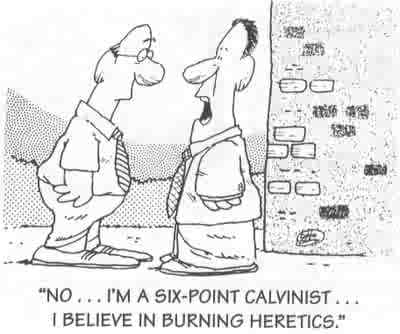
This is one of the gravest errors of (Hyper and High) Calvinist theology. In Calvinist theology, they rightly surmise that God's love is paramount at Calvary. Then they proceed to say that God's love bestowed in Christ and Him alone is only for the elect alone, because Christ only died for the elect. Therefore, God has nothing but sheer hatred towards the non-elect.

Protestant Reformed author David Engelsma has went to great lengths to show this is the case in his book Prosperous Wicked and Plagued Saints. It's an exposition of Psalm 73 aimed directly at the mainline Calvinist doctrine of "common grace." Engelsma, along with High and Hyper Calvinist theology, is simply in error here.

Instead of living in the Scriptural tension of Christ dying for the many (His chosen) and the all (total humanity), they erect a God with schizophrenia, making election the paramount decision God made pertaining to just about everything (it's called Supralapsarianism) and then all of God's workings in history are done in order to carry out election. Of course, one of the major drawbacks to this doctrine is that God simply creates billions of people for the sole purpose of damning them for the glory of Himself and the good of His elect.

I can't understand why this doctrine is as it is. There are other areas where Calvinists are more than happy to live in tension and believe Scripture in tension. Amillennialism is one such example. They joyfully talk about the already and the not yet, and speak of how we are living in this tension. Yet when it comes to the atonement, they are unwilling to surrender the golden calf of reason known as the TULIP. When it comes to that, it's black and white. God loves His elect, and He freakin hates everyone else. Damn sinners. Psalm 5:5 applies to those damn sinners, but not to the elect. But wait, aren't we all sinners, even as Christians?

Scripture sums up this tension in the atonement nicely.

1 Timothy 4:10: For to this end we toil and strive, because we have our hope set on the living God, who is the Savior of all people, especially of those who believe.

God is the Savior of all people. This reflects the universality of the atonement spoken of in John 1:29, 1 John 2:2, and numerous other verses. But, He is especially the Savior of believers. This reflects the particularity of salvation spoken of in passages like Matthew 1:21, stating, She will bear a son, and you shall call his name Jesus, for he will save his people from their sins.
Let us hold fast to the Word of Christ. In Christ, God is loving towards us. Towards all of us. Even the worst of us. Even the best of us. God is love, and this love is Christ.

1 John 4:9-10: In this the love of God was made manifest among us, that God sent his only Son into the world, so that we might live through him. In this is love, not that we have loved God but that he loved us and sent his Son to be the propitiation for our sins.

9/7/15

Christ is Sufficient

Christ is sufficient. This is most certainly true. If there is anything humanity needs to do in order to be saved, two things are also true. First, Christ would be insufficient, in Himself, as a Savior. Second, nobody would be saved.

Christ did it all. There is nothing more that needs to be done in order to be saved. Works will not get you there, for there is one who died and rose on your behalf and made satisfaction for all of your sins. Not just some, and certainly not just your sins before you became a Christian. No. All of them. Not only so, but Christ Himself established a Church and He delivers this free grace to us through Word and Sacrament. He washes us clean in our Holy Baptism. He pronounces us forgiven in absolution. He delivers us His Word in the preaching of the Gospel. He feeds us His body and blood for the forgiveness of our sins. It's all a one-sided deliverance of gifts. This is Gospel. This is THE Gospel. To turn around and say that we have to add to that is to effectively deny the Gospel. To say that there is something more to add is to claim that Christ did not do enough. May it never be so!

If Christ is not sufficient by Himself, nobody would be saved. Not one. If you think that Christ saved you, but now it's up to you to make good of grace to finish your salvation, then it's safe to say that you probably don't understand grace or your sinfulness. Different churches sometimes teach exactly this idea in different ways. Some churches flatly say that we are justified by faith plus works. Hey, 10 points for honesty and clarity. Others give you Christ and then take Him right back once you've made a decision - putting you on the treadmill of living out the life in a victorious way.

The truth is, even for the Christian, you can never move beyond the Gospel. You can never move beyond Christ. He is the center of everything for us. And Christ has done it all.

But Christ had to do it all, didn't He? I mean, just look at what the Holy Scriptures say about who we are and what we have done.

Jeremiah 17:9: The heart is deceitful above all things, and desperately sick; who can understand it?

Romans 3:10-12: as it is written, “None is righteous, no, not one; no one understands, no one seeks for God. All have turned aside; together they have become worthless; no one does good, not even one.”

Then go ahead and read verses 13-18. Not to mention, keep in mind that it's impossible to totally stop sinning, and God still has a standard of absolute perfection. Of course, that is why Christ does it all. The epistles of St. Paul point this out quite nicely. He writes numerous letters to first century churches addressing sin problems. 1 Corinthians is a great example. And he never hesitates to call these people brothers. They're simultaneously sinner and saint. Thus says St. Paul.

And to further the good news, Christ directly delivers His grace and good gifts to us directly and objectively through means. He does not grace us secretly in a Gnostic manner so then we can turn around and show Him how obedient we are by getting baptized and eating crackers and Welch's grape juice. That's not what the Scriptures say. The Bible does not talk about these sacraments in an ornamental fashion. It talks about them in a Sacramental fashion. They are God's objective means to save us.

That completely sufficient Christ gives us Himself in completely sufficient means of grace. Pretty nice, huh?

Hence, it's quite important that your theology and worship majors on the majors, so to speak. Who is Christ? What do we believe? How is man made right before God? To put it simply, if worship and theology is not Christocentric, it's missing the point and ends up majoring on the minors, so to speak.

The completely and perfectly sufficient Jesus at the center. All the time. For you.

+Pax+

8/3/15

John Owen, Calvinism, and False Dilemmas

One of the main Reformed arguments for the assurance killing doctrine of limited atonement is the trilemma proposed by John Owen. Owen posits three potential situations.

1. Christ died for all the sins of all men.
2. Christ died for all the sins of some men.
3. Christ died for some of the sins of all men.

OK, so far so good. A Lutheran can concur that one of those three options is the correct answer. I also think that we can safely dismiss the third option, since nobody within Christianity really believes that Christ only died for some sins of all men. Owen then continues with a simple argument: Is unbelief a sin? Essentially Owen ends up arguing that #1 leads to universalism and therefore #2 is the only viable option. Philosophically this is the argument he is making.

The problem here is that Owen's trilemma is not mutally exclusive. In other words, there are other options. Sure, if you're stuck in philosophy-land the trilemma is fairly tight.

Owen's issue is that it fails to separate atonement from reception of the same. He argues that all of those for whom Christ died will receive the atonement, of course. But once again, this slops both the atonement and the reception into one thing. Not only that, but it also slops them together in option #1 as well as the already dismissed option #3. Although perhaps option #3 is what many Calvinists would claim Arminianism holds to, it's not true.

The point is, we can have option #1 be true and still not end up with universalism. The Calvinist will then respond that it makes Jesus a weak Savior who didn't really save anyone. But that's nonsense too. It's a grasping at philosophical straws in this case.

In Lutheranism we can answer this charge with the delivery in real-time of that perfect atonement via Word and Sacrament, which is for everyone universally, but will not be received in faith by everyone universally. Of course, the Calvinist responds that the atonement purchased faith for the elect. But where does Scripture speak in this manner? Ultimately, Owen's trilemma is nothing more than a philosophical argument, not one based on the Holy Scriptures. It provides us with a few problems, so to speak.

First, it inherently rejects the efficacy of the Sacraments. Why can't Calvinists affirm baptismal regeneration? Because they see all sorts of baptized people walking around who are atheists and unbelievers now. They're right about that. Not only that, but they simply cannot affirm the very plain baptism texts in the New Testament at face value because the plain and clear reading of them violates not only the L in the TULIP but also the P. In other words, if someone was baptized as an infant and truly saved but later falls away and rejects Christ and dies in unbelief, the Calvinist is forced to say that Christ did not die for them and that they were never saved in the first place. Since the baptism passages make a mess out of the sacred TULIP, the plain and clear readings of these are rejected. The same goes for the universality of the Real Presence of Christ in the Eucharist.

Back to the atonement. Based on Owen's argumentation, the atonement itself must be the actual creator of faith in person's, since Christ bought that faith at Calvary, as opposed to the means of grace being the worker of faith, as Scripture states. Without getting into universal objective justification we'll just leave it here.

In short, Owen ties up the actual atonement with the reception of the atonement in real-time via grace alone. In Scripture we have Christ dying for the entire world universally. He died and rose for every sin ever committed. For believers and unbelievers alike. But not all are saved. Why?

It's not because Christ did not die for them. 1 Corinthians 15 even says that the Gospel that St. Paul preached to people (not only people already saved) was that Christ died and rose for their sins. Yet, that atonement must actually be received via the Gospel; even Calvinists teach that. In fact, only the most extreme Hyper Calvinists do not teach that.

So what condemns a person? Rejection of Christ. The Scriptures teach this. A person who rejects Christ is still in their sins. They remain children of wrath, just as we also were (Eph 2:1-3, ff). This raises another question for the Calvinists. If the atonement and the reception are conflated into one as Owen does, why are the elect under the wrath of God at any point in time? They can't have it both ways and simultaneously hold to Owen's trilemma.

At the end of the day, Owen's trilemma just doesn't hold up to Scripture. The Holy Scriptures simply do not speak in the manner that Owen does and that of all things should raise a red flag for any Christian.

+Pax+

6/13/14

Limited Atonement and Navel Oranges

1 Timothy 4:10 (ESV):  For to this end we toil and strive, because we have our hope set on the living God, who is the Savior of all people, especially of those who believe.

1 Timothy 4:10 (KJV): For therefore we both labour and suffer reproach, because we trust in the living God, who is the Saviour of all men, specially of those that believe.

Oh, the shenanigans! Not the Bible of course. The Bible speaks clearly the vast majority of the time.

1 Timothy 4:10 is a very difficult passage for the Calvinist because taken at face value, it is a dagger to the L in the famous TULIP. Of course, Calvinists are still sola scriptura folks, so they do not ignore the passage and do indeed have ways to explain it.

Here is Dr. Gary Long's attempt at some various explanations in his book Definite Atonement: 1 Timothy 4:10

The obvious problem here for the Reformed camp is the phrase found in the verse that says "...God, who is the Savior of all people (all men KJV)..."

Saviors save. Dr. Long's final conclusion makes little to no sense. He claims that "Savior" here means that God is the "providential preserver" of all men. Well, that is true. God is indeed the providential preserver of all men. What Christian disputes that? But on what basis can Dr. Long turn "Savior" into "providential preserver?" Where else in Holy Scripture does it equate saving and Christ being the Savior with His providential preservation? To put it bluntly, it doesn't. Dr. Long has to completely twist this Scripture to fit his theology.

Saviors save. Christ is the Savior. Christians know this. So, according to 1 Timothy 4:10, who did Christ save? Well, thankfully, Scripture answers this one in this verse. It says, "all people."

Saviors save. Where was Christ's saving work done? All Christians would faithfully answer: In His incarnation, on the cross, and in His rising from the grave.

According to 1 Timothy 4:10, He is the Savior of all people. His work saves, and it was done for everyone. But that isn't the end of the story. It still must be received by Word and Sacrament, in faith.

The doctrine of limited atonement not only twists the living crap out of this verse (among others), but it also has a pretty nasty (unintended) side effect. If Jesus only died for the elect and not the ones whom will end up in perdition, then how can one know if Christ actually died for them?

By looking to yourself and how well you're following Christ, of course! In other words, the doctrine of limited atonement has the nasty consequence of pointing us at ourselves and not to Christ and His promises for assurance of salvation.

This is why men like the Puritans and theonomists and reconstructionists are just being consistent. Limited Atonement, as well as Reformed Theology in general, when applying their own logical principles, is sharply theonomic and points us directly to our own navels for assurance and is very much based on adherence to the moral Law, and a confusion of Law and Gospel.

With sincere apologies to our Continental Reformed brethren, who do a lot better with the Gospel than the theonomists and Puritans.

+Pax+

4/19/14

Christ Crucified for You! On Good Friday, not Wednesday

Holy Week is the time of year where different theories about the specific date of the crucifixion and resurrection come up. One of the most common theories out there is one that is generally referred to as the Wednesday to Saturday theory. To put this theory in simple terms, they believe that the Last Supper was instituted on Tuesday, Christ was crucified on Wednesday, and rose from the dead on Saturday. Their proof text for this belief is found in one place in Holy Scripture, the sign of Jonah.

St. Matthew 12:40: For as Jonah was three days and three nights in the belly of the great fish, so will the Son of Man be three days and three nights in the heart of the earth.

So, basically, they argue that since this text uses the phrase "three days and three nights," Christ could not have been crucified Friday and risen on Sunday. Why? Because that's only 2 nights.

The solution to this apparent dilemma is actually quite simple. First and foremost, we have numerous other Scriptures that point to a Friday crucifixion and a Sunday resurrection. Second, we have the issue of Hebrew idioms.

First of all, let's deal with the Hebrew idiom going on here. The phrase "three days and three nights" is never meant to be a literal phrase in Holy Scripture. It's an idiom that Hebrews used to describe any part of any three days. Hence, Scripture can also repeatedly insist that Christ rose on the third day.

Christ speaks of the resurrection often in Scripture, and only this one time does He use this phrase "three days and three nights." Scripture uses other phrases as well, such as:

St. Mark 8:31: "after three days"

St. John 2:19: "in three days"

St. Matthew 16:21; 17:23; 20:19; St. Luke 13:32; 24:46: "the third day"

Obviously, all of these refer to the same event. What we have to recognize is that the bible reckons time inclusively. In other words, chronology in Scripture can contain any of these phrases and refer to the same event. If not, well, Houston, we have a problem. The third day and "three days and three nights" are not the same thing in a strictly literalistic sense. After three days and in three days aren't either. Quite simply, we have to take all of these phrases as referring to the same event. Were the biblical authors and Jesus confused? Certainly not. The point is, they simply used these phrases interchangeably for counting time in Hebrew culture.

To put it even simpler still, if any part of any day was included in chronological counting, it was always reckoned as a whole day. Hence, Jesus can rise on the third day and this can also be called "three days and three nights."


"Before we turn to the Bible for confirmation of this principle, let us read the authoritative statement of the Jewish Encyclopedia on the matter. "A short time in the morning of the seventh day is counted as the seventh day; circumcision takes place on the eighth day, even though, of the first day only a few minutes after the birth of the child, these being counted as one day.” Vol. 4, p. 475. How clearly this defines the Hebrew method of computing time. Any small part of a day was reckoned as the entire twenty-four hour period. It is the Hebrew form of speech and language. Scores of contradictions would appear in both Old and New Testament if this principle were ignored. We must compare Scripture with Scripture and use the idiom of the language in which the Bible was written. Inclusive reckoning was taken for granted by all writers of the Scripture." -Joe Crews (Three Days and Three Nights)

Counting time inclusively is all over the Old Testament as well. (1Sam 30:12-13, Gen 42:17-19, 2Chr 10)

We have other Scriptural evidence as well that the crucifixion was on Friday and the resurrection was on Sunday.

1. The Jewish Sabbath began at sundown on Friday and ended at sundown on Saturday.

This is important because of the data we have from Holy Scripture regarding the crucifixion.

St. Matthew 27:62-64: On the next day, which followed the Day of Preparation, the chief priests and Pharisees gathered together to Pilate, saying, “Sir, we remember, while He was still alive, how that deceiver said, ‘After three days I will rise.’ Therefore command that the tomb be made secure until the third day, lest His disciples come by night and steal Him away, and say to the people, ‘He has risen from the dead.’ So the last deception will be worse than the first.”

Notice also, there is that inclusive counting again. "After three days." And then "the third day."

St. Mark 15:42: Now when evening had come, because it was the Preparation Day, that is, the day before the Sabbath

St. Luke 23:54: That day was the Preparation, and the Sabbath drew near.

St. John 19:31-33: Therefore, because it was the Preparation Day, that the bodies should not remain on the cross on the Sabbath (for that Sabbath was a high day), the Jews asked Pilate that their legs might be broken, and that they might be taken away. Then the soldiers came and broke the legs of the first and of the other who was crucified with Him. But when they came to Jesus and saw that He was already dead, they did not break His legs.

So here we plainly see that Jesus was crucified and Joseph of Arimathea asked for His body on the Day of Preparation, which is the day before the Sabbath: Friday. Likewise, St. John tells us that the Jews would not allow a body to remain on the cross during the Sabbath. The Jews requested that the bodies on the cross (Jesus and the two thieves) were to have their legs broken because the Sabbath was drawing near. In other words, it was darn near sundown on the Day of Preparation - Friday.

2. The Resurrection was on Sunday.

St. Mark 16:1, 2, 9: Now when the Sabbath was past, Mary Magdalene, Mary the mother of James, and Salome bought spices, that they might come and anoint Him. Very early in the morning, on the first day of the week, they came to the tomb when the sun had risen...Now when He rose early on the first day of the week, He appeared first to Mary Magdalene, out of whom He had cast seven demons.

St. Matthew 28:1: Now after the Sabbath, as the first day of the week began to dawn, Mary Magdalene and the other Mary came to see the tomb.

St. Luke 24:1: Now on the first day of the week, very early in the morning, they, and certain other women with them, came to the tomb bringing the spices which they had prepared.

St. John 20:1: Now on the first day of the week Mary Magdalene went to the tomb early, while it was still dark, and saw that the stone had been taken away from the tomb.

Conclusion

It's pretty clear and obvious that the Wednesday to Saturday theory is very unbiblical at best. Once we see that Hebrews counted days inclusively, there is no problem here. The overly literalizing of the phrase "three days and three nights" actually slaughters the inerrancy of Scripture in this case, since it ends up falsifying all the other phrases that mention "the third day" or something like it. It also falsifies the clear biblical data that we have regarding the crucifixion and resurrection.

In other words, the Church has always had this correct. Jesus Christ was crucified on Friday and rose again on Sunday. The biblical data is irrefutable for this fact.

+Pax+

4/17/14

Maybe Jesus Didn't Die For You. Poof! No Assurance.

Limited Atonement. Particular Redemption. Effectual Atonement. Definite Atonement. All of these are terms for the Reformed doctrine that Christ died only for the elect. That is to say, there are many people in history, nay most people in history, that the Christ did not die for.

Well, at least in Reformed Theology this is the case. It's a cute little theory based on logical deductions as well as some Scriptures. Yet it doesn't tell the whole story and doesn't do justice to the whole of the biblical data. At the end of the day, it ends up being another half truth. Reformed Theology is great for half truths. They affirm predestination to salvation. Great! That's clearly in Scripture. But then they turn around and say that God predestines people to hell. Not so great. That's not in Scripture. They affirm that Christ died for the world. Great! That's in Scripture. Then they affirm that world doesn't mean everyone. It just means that Christ died for the world in general, from which He will save all His elect by dying for them. But not for the others. Not so great. That's not in Scripture. They affirm that God and God alone saves and keeps us to final perseverance and salvation. Great! That's in Scripture. Then they turn around and say that everyone ever in a state of grace will never fall away and will infallibly persevere. And the rest were never saved to begin with, whether they reject Christ outright or give up their profession. Not so great. That's not in Scripture.

Anyhow, limited atonement is a doctrine that absolutely slaughters a person's assurance of salvation. I know, I was a Calvinist for years. This is typically where the Calvinist plays the intellectual card and says that I didn't really understand limited atonement. That's the problem, I understood it too well.

First of all, since Christ may or may not have died for you, looking to the cross for assurance is a fool's errand. After all, you might be deceived into thinking you're a Christian but you really aren't. I've had many Calvinists say that if God damns them to perdition, well, it will be for His glory, and they'll just have to revel in the glory of God from hell. I'm like, OK dude, what a comforting through.

Second, limited atonement forces a person to look inwardly for their assurance of salvation. If Christ may or may not have died for you, then the only way to know this is by looking to your own faith to see if it is really true faith, and looking to your obedience to see if you really love God.

But here is the rub. On our best days, we still do not have perfect faith, much less perfect obedience. We are fickle, us humans. We're subjective. We have emotions and we run the emotional roller coaster. We're not the same person (metaphorically speaking) from day to day. Looking to ourselves to see if we are really saved is really just not a good idea. We're ultimately going to fall in one of two directions. First, we're going to be led to despair because we realize that our faith nor our obedience to Christ is that great. We have our ups and our downs. If we ask the question "What does Christ demand?" Well, we must answer that He demands perfection from us. Hence He died and rose for us. But if that dying and rising is only for certain people...

Second, we might fall into the pride category. We think we are doing so well that we're definitely saved, because we obey Christ so well and stuff.

The point is, if limited atonement is true (thank God it's not), then the only place we can possibly look for assurance of salvation is in ourselves, to see if we're really truly believers.

Thankfully, this half truth of the atonement given to us by Reformed Theology is just that; a half truth.

The truth, thankfully, lies in the objectivity of Christ's work given to us. He died and rose for everyone universally. (Here comes the "that makes Christ a failure!" argument from the Calvinist, or some other silly thing.) He also gives us infallible *and objective* promises rooted in Himself in the here and now, to spare us from the constant navel gazing that limited atonement brings in its wake.

Ironically, Reformed Theology sort of ends up in the same place on the topic of assurance as other expressions of Christianity that affirm free will or justification by works. (Such as Arminianism or Roman Catholicism)

He baptizes us. That's His work to us and is objective. We are baptized in the Name of the Triune God for the remission of our sins. He gives us His Word. He also gives us His true Body and Blood in the Lord's Supper. That also is objective. It's Christ giving us Himself. It's grace.

So where do we look for assurance? Jesus Christ on the cross, given to us in Word and Sacrament. Not to ourselves, for that will just kill us. We are simul iustus et peccator, after all.

+Grace and Peace+

3/21/14

Smalcald Articles - Luther on Sin

Smalcald Articles, Part III, Article I: Sin

1 Here we must confess, as Paul says in Romans 5:12, that sin originated from one man, Adam. By his disobedience, all people were made sinners and became subject to death and the devil. This is called original or the chief sin.

2 The fruit of this sin are the evil deeds that are forbidden in the Ten Commandments [Galatians 5:19-21]. These include unbelief, false faith, idolatry, being without the fear of God, pride, despair, utter blindness, and, in short, not knowing or regarding God. Also lying, abusing God's name, not praying, not calling on God, not regarding God's Word, being disobedient to parents, murdering, being unchaste, stealing, deceiving, and such.

3 This hereditary sin is such a deep corruption of nature that no reason can understand it. Rather, it must be believed from the revelation of Scripture. (See Psalm 51:5; Romans 6:12-13; Exodus 33:3; Genesis 3:7-19.) Therefore, it is nothing but error and blindness that the scholastic doctors have taught in regard to this article:

4 Since Adam's fall the natural powers of human beings have remained whole and uncorrupted, and by nature people have a right reason and a good will, as the philosophers teach.

5 A person has a free will to do good and not to do evil, and, on the other hand, to not do good and do evil.

6 By natural human powers a person can observe and keep all God's commands.

7 By natural human powers, a person can love God above all things and love his neighbor as himself.

8 If a person does as much as is in him, God certainly grants him His grace.

9 If a person wishes to go to the Sacrament, there is no need of a good intention to do good. It is enough if a person does not have a wicked purpose to commit sin, so entirely good is human nature and so effective is the Sacrament.

10 Scripture does not teach that the Holy Spirit with His grace is necessary for a good work.

11 These and many similar ideas have arisen from lack of understanding and ignorance, both about sin and about Christ, our Savior. They are truly heathen teachings that we cannot endure. For if such teaching were true, then Christ has died in vain. A human being would have no defect or sin for which He would have died. Or He would have died only for the body, not for the soul, since the soul is sound, and only the body is subject to death.

Luther has here pointed out the numerous errors of the medieval church regarding original sin. More importantly, he has also pointed out the extremely problematic conclusions of such a sloppy theology. Ultimately, it glorifies man and devalues Christ.

How much do we see this sort of theology today? I would assert that we probably see it more today than even in Luther's time. It's the standard theology in America. The only theologies that stand against such man-glorifying theology are those of the Reformation.

In short, nearly all theological errors are a result of making way too much out of humanity. We are told we have unlimited potential and that we can do whatever we put our minds to. When we carry this over into theology, we end up with Christ as an afterthought and us as the real Saviors. The more we prop ourselves us, the further we get from Scriptural theology.

This short article written by Luther is just as true today as it was then. And it's just as important too.

As we continue in Lent towards Holy Week, let us remember that it is Christ alone -not us, not us plus Christ- that saves us.

+ Grace and Peace in Christ +

2/15/14

Lap-Who???

Our Calvinist friends invest a lot of time, discussion, and effort into something called the Lapsarian debate. Ever heard of that Lutherans? I'm guessing some of you have, but many of you haven't. So in this blog I'm going to cover what the Lapsarian debate is, as well as the varying positions that are held. I'll wrap it up by how Lutheran theology views this in-house discussion amongst Calvinists.

The Lapsarian debate or discussion has to do with God's decrees in eternity past, before the foundation of the world. Traditionally, Calvinists take one of two stances in this discussion, but there are some nuanced versions of Lapsarianism as well. That being said, we'll leave the nuanced versions alone for our purposes here.

John Calvin
Reformed theology speaks of the logical order of God's decrees in eternity past. They're not so much speaking about the temporal order here. Keep in mind that all of these positions hold that all of these decrees occurred in eternity past, before the foundation of the world. In short, none of them have God decreeing something as a reaction to what man does in time.

The five topics that are ordered in this discussion are election, creation, sin, Christ's atonement, and regeneration. The four positions I will outline here all order the decrees differently. The two standard positions are called Supralapsarianism and Infralapsarianism. These are the two traditional Calvinist positions. There are two other decretal orders called Sublapsarianism and then of course, Arminianism. Traditional Calvinists reject Sublapsarianism as being something other than Calvinism (it's 4 point Calvinism) and of course reject Arminianism as heretical (see the Synod of Dordt, 1618-19).
 
SUPRALAPSARIANISM

Supralapsarianism logically orders God's decrees as follows.

1. Elect some and reprobate the rest.
2. Create the universe.
3. Decree the fall of man.
4. Send Christ to die for and save the elect.
5. Regenerate the elect via the inward call of the Spirit.

You can pretty clearly see in Supralapsarianism, that election comes before everything. The other thing that is important to notice here is that election is logically decreed prior to the atonement. In other words, this order of God's decrees has a limited atonement for the elect alone.

Supralapsarianism is generally equated with a "high" Calvinism of sorts.

If you are interested in learning more about the Supralapsarian position, I would recommend my friend Andy Underhile's blog found here: Contra Mundum. Andy is a staunch Supralapsarian and presents the position well.

INFRALAPSARIANISM

Infralapsarianism logically orders God's decrees as follows.

1. Create the universe.
2. Allow the fall of man to occur.
3. Elect some sinful men and pass over the rest.
4. Provide Christ's atonement for the elect.
5. Regenerate the elect via the inward call of the Spirit.

The main difference between Supra and Infra is that God is electing people in Infra *in view of their sin.* In other words, in Supra, God elects first, then creates the necessary conditions to bring about His election; including sin and the fall. The Supra argues that God is sovereign over everything, including sin. The Infra counters that this makes God the author of sin. And round and round the Calvinists go.

However, it still is important to point out that Infralapsarianism also places election prior to atonement and therefore has a classical Calvinist limited atonement.

SUBLAPSARIANISM

Sublapsarianism, also known as Amyraldism, is another hat in the ring of God's decrees.

Moise Amyraut - Four Points
1. Create the universe.
2. Allow the fall of man to occur.
3. Provide Christ's atonement for the whole fallen human race.
4. Elect some and reprobate the rest.
5. Regenerate the elect via the inward call of the Spirit.


Here we have Christ's atonement preceding election. Therefore, the atonement in Sublapsarianism is universal and provisional. Then this theory proceeds to say that since man is dead in sin, none will freely choose Christ and therefore God must elect some to take hold of that universal atonement.

Traditional Calvinists reject this theory as illogical and inconsistent. Many even go as far as to say that it is warmed over Arminianism.

ARMINIANISM

Arminianism is the theology that came out of Calvinism in the late 16th century and into the early 17th century.

1. Create the universe.
2. Allow the fall of man to occur.
3. Provide the atonement for the whole human race.
4. Offer Christ indiscriminately to everyone.
5. Elect those who believe.


Obviously, in this theology, it's not Calvinistic at all. It has God, in essence, looking through time and electing those who He sees will believe in Christ. Election is something done in response to human freewill here and not something that is a cause of salvation.

LUTHERANISM AND LAPSARIANISM

So, how should we as Lutherans approach this discussion? In fact, I am guessing that some of you Lutherans who read this blog wonder why I even wrote it. And to be honest, that's completely fair. I wrote it for informational purposes alone. I am of the opinion that we ought to know about other theologies. And, as a former Calvinist, that is the other theology that I can expound upon.

So again, how should we as Lutherans approach this? Where do we fall in this debate?

This should not surprise you, but we don't fall anywhere here. In fact, we reject the whole Lapsarian debate outright. But why?

Simply put, these ordering of decrees is an attempt to peer into the hidden God. From our perspective, the whole discussion really is not worth having and worth taking a stance upon. To put it in Lutheran terms, it's a theology of glory and not a theology of the cross. Instead of being focused on Christ crucified for you, it's focused on decrees in eternity past. Instead of focusing on the revealed God given for you in Christ, it's focused on the hidden God, not revealed to us to much extent in Scripture. Yes, for sure the people in these different Lapsarian camps use Holy Scripture to defend their positions. But from my perspective, none of them are slam dunks anyways. It's speculation for the most part. And speculation can be a bad thing sometimes.

So, as Lutherans, we simply do not engage in these sorts of debates most of the time. We would rather stick to the revealed Christ given for us at Calvary and then received in Holy Baptism and Holy Communion.

We may get labeled as irrational or simplistic by some of those in Reformed Theology, but really, we shouldn't care. We're not irrational or simplistic, we just have no desire to go beyond the Word into hidden topics. Or in another way, we affirm ministerial usage of reason, but not magisterial. Not all Calvinists use magisterial reason over Scripture, but sadly many do.

Hopefully this article was helpful for Lutherans to understand some of the stances out there.

Looking under Jesus, the author and finisher of our faith. ~Hebrews 12:2

+Grace and Peace+

10/1/13

SuperHyperCalvinisticexpyaladoh! Part Tree Zee Finale

Welcome to Don Fortner, part three. Pr. Fortner's sermon "If Christ Died for All" is what I am addressing here. He concocts 14 points as to why he believes universal atonement to be blasphemy. Pr. Fortner, sadly, works off a strict paradigm of Hyper (or High) Calvinism vs. freewillism. There is no middle ground for him and there are no other options it seems. His complaints are more properly directed at synergistic theologies; Pelagianism in particular. But they don't allow for, nor even address, the proper and most biblical theology of objective monergism via Word and Sacrament, universal atonement, and univeral grace of Confessional Lutheranism. Pr. Fortner has boxed all theology regarding the atonement into a forced choice ala John Owen.

It's no secret that I was a staunch Calvinist for many years. I actually have an old blog defending limited atonement. Here it is:

He Did It Perfectly

And the first two offerings in this series are here:

Part One

Part Deux

The doctrine of universal atonement is blasphemous because:

10. Teaching a universal atonement separates the priestly office and work of Christ, declaring that Christ sacrificed himself for and died in the place of a people for whom he refused to pray (John 17:9, 20).

Here is another common Calvinistic argument, that Christ refuses to pray for the world. The problem with this argument is that it is based on poor exegesis and application of the text in St. John's Gospel. The High Priestly Prayer in St. John 17 is a prayer specifically for the apostles first (Jn 17:9), and then those who will believe second (Jn 17:20).

The Calvinist then proceeds to read a presupposition into the text. Namely, that only the elect ever believe and no one else. John 17:9 is specifically speaking about the apostles. So in that case, Christ isn't even praying for all the elect, but only the apostles.

In the second case, He says He is praying for all those who would believe in His Name. Sure, if you extrapolate a Calvinist paradigm and theology onto Scripture you could interpret St. John 17:20 that way, but it's not necessary to do so.

Thirdly, nowhere does the text ever say that Christ refuses to pray for others. Nowhere. It is simply a prayer, that in this instance, was geared towards the apostles and future believers specifically. The Calvinist reads way too much into this passage.

So does Christ ever pray for those who are unsaved and do not believe? Yes, I think He does on the cross.

St. Luke 23:34: And Jesus said, “Father, forgive them, for they know not what they do.”

Here is an example of Christ praying for the people who had Him crucified. The Calvinist now has to opine that all those persons were elect. That's a huge assumption and stretch of the text here.

Pr. Fortner's 10th point is weak at best.

11. Teaching a universal atonement makes the cross of Christ a miscarriage and asserts that he shall never see of the travail of his soul and be satisfied (Isaiah 53:10-11).

This is another major stretch of the text based on an assumption. What bothers me the most is that Pr. Fortner inadvertently blasphemes the cross of Christ, calling it a miscarriage. He calls it an abortion. Such language should make a man tremble in fear.


Pr. Don Fortner
But again this is a weak assertion. Pr. Fortner assumes that Christ's death is a failure if anyone for whom He died perishes and Christ isn't satisfied with it if that is so.

This is not the case, however, for all the elect will be saved either way. Of course Christ is satisfied with His offering. Likewise, a universal atonement puts the guilt solely on man for rejecting Christ.

12. Teaching a universal atonement gives sinners no reason to look to, trust, and hope in Christ.

This is probably Pr. Fortner's weakest argument so far. It makes no sense whatsoever and in reality the reverse is truer than his assertion.

Francis Pieper, noted Lutheran theologian has said:

Francis Pieper
It is clear that both the Calvinistic and the synergistic attempt at solution changes the Scriptural concept of saving grace as ‘gratuitus Dei favor propter Christum’ into ‘gratia infusa.’ Whoever denies the universal gracious disposition of God proclaimed in the Gospel must necessarily direct those who seek grace to the effects of grace in man, that is, to the ‘gratia infusa.’ Synergists do this from the outset by asserting that conversion and salvation do not depend alone on God’s grace in Christ, but also on the better human conduct. Thus all who would be wiser than Scripture and would answer the question: ‘Cur alii prae aliss?’ in this life, land in the Roman camp, in work righteousness…….. p. 51f.

Next, justification by faith presupposes the ‘gratia universalis.’ Unless the terrified sinner knows that Christ has fully reconciled all men to God and offers the forgiveness of sins in the Gospel to all men without distinction, he will not seek the forgiveness of his sins in the Gospel; he will base the forgiveness of his sins on the “infused grace” (gratia infusa) after the fashion of Rome. p. 508.

Pieper's point is that the Calvinistic doctrine of limited atonement causes the sinner to look inside himself for assurance of salvation and not outside of himself to the Christ on the cross. Why is this so? Precisely because Christ has only died for specific persons in that scheme.

13. Teaching a universal atonement offers believers no reason to love, obey, and glorify Christ.

Just when you thought things couldn't get any sillier, Pr. Fortner asserts this whopper. I don't know what else to say here other than this is complete skubalon (NT Greek word for 'dung'...but the actual word is much stronger than that...you know, like 'crap' or something).

Contrary to Pr. Fortner's baseless assertion, a universal atonement combined with the one-sided monergistic grace given to us in Word and Sacrament, that is for everyone, by the way, actually gives us the greatest reasons possible to love, obey, and glorify Christ.

1. It puts Christ's work extra nos, or outside of us.

2. It excludes anything we do to earn or merit it.

3. It gives us massive assurance, knowing that Christ did indeed die for us and we can trust Him fully to save us.

Those are about the best reasons to trust, love, and obey Christ that there are; especially in light of knowing that it does not depend on you.

14. Above all else, teaching a universal atonement declares that Jesus Christ is a failure, a weak, frustrated, defeated failure, rather than the sovereign, effectual Savior of his people!

This is another poorly argued point that once again rests on Calvinistic presuppositions. The Calvinist surmises that if anyone ends up in hell for whom Christ died, that means Christ was a failure.

This is nonsense. Silly shenanigans at their finest.

This ties back into #11. A universal atonement actually makes man culpable for his rejection of Christ, thereby putting all the blame for condemnation on man, not God and his nebulous decree (in Calvinism) to reprobate most of humanity by either active working or passing over.

This argument reminds me a lot of the foolish lynchpin of postmillennialism: "We're optimistic and you're pessimistic. Don't you want to have an optimistic eschatology?"

It sort of sounds like that. You know "Our Christ doesn't fail and yours does." Completely not true at all, for all the elect will be saved. Yet, we allow for the biblical doctrine of universal grace, which makes justification by faith crucial, which according to Pieper, is called into question in the Calvinist scheme.

Ultimately Pr. Fortner's scheme robs the believer of assurance and forces us to look inwardly. Of course, looking inwardly is a fool's errand, for we can never be sanctified enough. This side of glory, we will never be perfected in love or in works.

We *must* look solely to Christ and His work for us, knowing that He has given Himself to us on the cross and gives Himself to us objectively in Word and Sacrament. And we must know that He has given Himself for us and not only for a select few. The only theological camp that can affirm all of these things is Confessional Lutheranism. I don't say that in a snarky or snide manner; much less a prideful one. I say it because it's true.

Praise to You, O Christ.

9/30/13

SuperHyperCalvinisticexpyaladoh! Part Deux

Yesterday I put forth a rather critical post regarding Calvinistic Baptist Pr. Don Fortner's criticisms of universal atonement. In his sermon "If Christ Died for All" he came up with 14 "blasphemies" of universal atonement. I addressed the first two in the first blog. I'll be addressing many more here. The first blog post can be found here:

Part 1 - Hyper Drivel

Don't matter. Either Jesus died for you or not.
The doctrine of universal atonement is blasphemous because:

3. Teaching a universal atonement reduces the wisdom of God to foolishness.

I'm not sure what he's trying to say here, unless it's that Christ couldn't possibly die for everyone because God is omniscient and His plan is always perfect. Thus, since God elected some persons, that means Christ simply couldn't have died for those whom the Father did not elect. This stance is based on the Reformed doctrine of the Pactum Salutis, also known as the Covenant of Redemption. This is a pre-creative covenant in which the Father, the Son, and the Spirit make a covenant to carry out the plan of redemption. In short, the Father elects people, the Son comes and atones for them, and then the Spirit regenerates them in due time.

Mr. T pities you, Pr. Fortner.
OK, so I get the Pactum Salutis. It fits nicely in the Calvinistic system. But to say that a universal atonement reduces the wisdom of God to foolishness, is, well, foolishness. Especially in light of Holy Scripture.

In this case, the Calvinistic rationalism has gotten the best of Pr. Fortner. Instead of simply turning to Holy Scripture and believing what is written, he instead decides to erect emotional arguments against the traditional and proper Christian stance of universal atonement. So you disagree with it, we get that. You're entitled to be wrong and to be a hyper Calvinist. But really, "universal atonement reduces the wisdom of God to foolishness?" Come on, you can do better. Which you actually did in #4.

4. Teaching a universal atonement is a denial of the justice of God.

This is a tougher one to deal with. Why is this so? Because this is the classic Calvinist "double jeopardy" argument. It goes something like this: If Christ paid for a person's sins, then that person cannot go to hell, because that would make God unjust for punishing that person's sins twice - once on Christ and then again on them.

But...what if a person rejects Christ? What if they despise the Lamb who died for them? Then what? The Calvinist says this is not possible. Scripture says otherwise.

The double jeopardy argument makes a lot of logical sense but in the end it's nothing more than an unnecessary logical leap that is not required by the text of Holy Scripture. Mainly, because it ends up denying Holy Scripture in some places, and that's just not good.

5. Teaching a universal atonement reduces the omnipotence of almighty God to impotence weaker than the will of man!

Yeah, if you're talking about Pelagianism, sure. I can get on board with this criticism if it's aimed in that direction and in that direction only.

To be succinct, a universal atonement in itself does not lead to those conclusions. Sorry, Pr. Fortner, you've made a false argument here.

Lutheranism teaches a universal atonement. But we're also monergists and God's saving grace actually saves in Lutheranism.

6. Teaching a universal atonement asserts that the immutable God is, after all, fickle, mutable, and changeable.

Uh...no it doesn't. Pr. Fortner here again makes a leap of logic and connects God's foreknowledge or foreordination with the atonement and surmises something like this:

God ordained everything.
God elected the elect and no one else.
Therefore, Christ only died for them and no one else.

Or else He's not immutable. And stuff.

Sorry, but the argument doesn't flow and is unscriptural to boot. God is immutable. Truth. Christ died for everyone. Truth. Believe it, it's just Scripture.

7. Teaching a universal atonement robs God of his glory in salvation.

You see where these arguments all head to? They're aimed at free-will theologies and synergism. All of them. Of course, this makes every argument Pr. Fortner erects false, because universal atonement does not require synergism. His sermon would be better off aimed at Pelagianism or Semi-Pelagianism, not universal atonement.

So, does universal atonement rob God of His glory in salvation? No, not at all.It grounds salvation -all of it- in the work of Christ alone. It also grounds condemnation -all of it- in man alone.

Hmm...isn't that what Lutheranism teaches? Yeah, thought so.

8. Teaching a universal atonement denies the satisfaction of Christ.

No, no, no it doesn't. What denies the satisfaction of Christ is adding something to His work. Of course, the high Calvinist defaults back to Owen's trilemma (see first post) here.

We teach that the atonement in itself is sufficient and effective for everyone universally. It must be given to you through Word and Sacrament to be received by faith alone, however.

The high Calvinist counters that it is Christ's death plus nothing that brings the elect and only the elect to faith and repentance. We agree here for the most part. Christ's death saves. Plus zero. But it must be received. You know, by Holy Baptism, the preaching of the Gospel, and the true body and blood of Christ in the Sacrament of the Altar. And stuff.

The high Calvinist ultimately cuts out the means of grace as effectual; making grace completely unmediated, or only sometimes mediated - but only to the elect. It also raises questions about justification by faith alone.

9. Teaching a universal atonement affirms that there are multitudes in hell for whom the Lord Jesus Christ died in vain!

Yes, there are multitudes in hell for whom Christ died. That does not make His death in vain. That argument has always fallen on deaf ears to this guy, even as a Calvinist. It's sort of a silly canard based on emotion again.

Anyways, those are my extremely limited thoughts on Fortner's #3-9 reasons. Most of his arguments are aimed at Pelagians, not universal atonement. Unless he's a sheer rationalist...

Oh wait...

9/29/13

SuperHyperCalvinisticexpyaladoh! Part 1, and Stuff.

No Christ for you! Heathen!
I came across some Don Fortner stuff. If you don't know who Don Fortner is, he is a Calvinistic Baptist machine gun of a pastor. I came across a sermon by Pr. Fortner entitled "If Christ Died For All." In it, he proceeds to fire off 14 "blasphemies" of universal atonement. But before we go any further, I have to add a disclaimer.

***Don Fortner is not normative of Reformed Theology. The majority of our Reformed brethren reject his teaching to an extent. Pr. Fortner is a very high, or even hyper, Calvinist.***


So, from the outset it is only fair to point out that I am not going after the classically Reformed here. Not even close. The teaching I am going after here is something other than Calvinism, to be sure. So here we go.

I also write this as someone who used to lean in this direction a bit. So, although I'm certainly not the authority on hyper Calvinism, I am familiar with the argumentation employed by Calvinists in this regard and hope to be a help to Confessional Lutherans who may not be aware of Calvinistic thought and theology.

The doctrine of universal atonement is blasphemous because:

1. The teaching that Christ died to save all men makes man his own savior.

This is a common argument that comes from the higher Calvinistic circles. The problem with this argument is that it never gets out of its own faith tradition. That is to say, many Calvinists assume that there really are only two branches of theology that everything boils down to: Calvinism and Arminianism. And when they talk about Arminianism, they generally mean Semi-Pelagianism or Pelagianism.


It's John Owen, yo!
In short, the Calvinist usually applies Owen's trilemma here. Basically, Owen postulates that Christ either died for some of the sins of all people (Who teaches that?), all of the sins of all people (Classic Christian atonement), or all of the sins of some people (Definite Atonement).

So lurking beneath the surface here is this assumption that Calvinist John Owen postulated and that Calvinists are quick to point out has never been logically refuted and cannot be.

However, the postulate doesn't cover all the bases, so to speak. It assumes either a Calvinistic or Arminian atonement theory.


The Calvinist assumes that if Christ death was effectual, then it must by definition save everyone universally for whom it was intended; and not only save them at Calvary, but also bring them to final glorification and the eternal state. Since we know that not everyone ends up glorified, they put two and two together, and voila, limited atonement for the elect alone.

The other option, they surmise, is that if Christ died for everyone He didn't actually save anyone at all, and you're left with a universal atonement that only makes man savable dependent on the will of man making it effectual.

So this is where Pr. Fortner gets this stuff. The whole idea of universal atonement is blasphemous rests on these presupposed Owenist assumptions.

Enter Confessional Lutheranism. We affirm both universal atonement as well as monergism. To the Calvinist, especially the high Calvinist, this seems like nothing more than a mumbo-jumbo of contradiction.

But what they fail to see is the objective monergism of Confessional Lutheranism. To them monergism means that the Spirit is completely independent of means and the Spirit just runs around randomly. They may give lip service to the means of grace, but in reality they only half affirm them. (I refer to hyper and very high Calvinism here) Want to know where they get that idea? It's based on a misinterpretation of John 3:8.

And you know, John 3:16 really says "For God so loved the world that He hates most of it..."

Christ died objectively for the whole human race collectively at Calvary. He distributes this perfect saving work temporally via His means of grace. This would be the Word of God preached, given in absolution, and given to us in water, bread, and wine in Holy Baptism and Holy Communion.

It's not a potential salvation. Our's is not an Arminian atonement nor a potential one. It's an effectual one, distributed to us by means. We affirm penal substitution just as the Calvinists do. However, our monergism is objective. God delivers that salvation to us in time. It's Christ for you. Right here and right now. And this speaks volumes to the assurance of our salvation.

2. Teaching a universal atonement reduces the love of God to nothing.

This statement is really nothing more than foolish triumphalistic tripe. I'm not even completely sure where Fortner is going with this one. Perhaps he is implying that if God loves everyone equally and unconditionally, it means nothing.

That idea, if that's where he is headed, has no grounding in Scripture though.


God hates you because Christ didn't die for you. Heathen!

There certainly are a few passages in Scripture that state that God hates. Of course God hates evil. No one disputes that. The problem with this scheme is that they start with election and then read all of God's actions through election. Right at the beginning of their theology is the idea that God elected some and reprobated others; for His glory of course.

This is a mistake and a prideful one at that. Yes, Lutherans affirm election. Yes, we affirm that election is a cause of salvation. Yes, we affirm that election came before the foundation of the world. But to put election first before everything in God's mind and make God's election the primary reason as to why God carries out all His works is a form of the theology of glory. Where election should humble us, the high Calvinists go digging into God's decrees and end up making their own election the thing that drives everything that God does!

I do not mean to infer that our Calvinistic brethren are not Christ-centered, for that would be a foolish error on my part. However, in high Calvinism, election is central, the sovereignty of God is central, and God's hidden decrees rule the day. In Lutheranism, we look to the revealed Christ hanging on the tree for us and risen from the grace for us; not to decrees that are hidden to us.

Jesus Christ revealed to us is central to everything. You want to see God? Look to Christ. You want to know what God is like? Look to Christ.

There are numbers 1 and 2 on Fortner's fortnight of universal atonement blasphemies.

9/27/13

Huggin' The Tree

The Holy Scriptures have a lot to say about trees. They're spoken of figuratively quite often throughout the Bible. Good trees bear good fruit; bad trees bear bad fruit. And so on. Trees are also spoken of literally in Scripture. Zaccheus climbed a sycamore tree to see Christ as He was passing by. Then Zaccheus said the sinner's prayer after coming forward to the altar call while singing "Just As I Am" the 8th consecutive time.

Speaking of decisional regeneration and the sinner's prayer...


The Scriptures also talk about some more important trees. Like the tree of life, or tree of the knowledge of good and evil.

Or the cross.

Galatians 3:13-14:  Christ redeemed us from the curse of the law by becoming a curse for us—for it is written, “Cursed is everyone who is hanged on a tree”— 14 so that in Christ Jesus the blessing of Abraham might come to the Gentiles, so that we might receive the promised Spirit through faith.

1 Peter 2:24: He himself bore our sins in his body on the tree, that we might die to sin and live to righteousness. By his wounds you have been healed.

The true tree of life is the cross on which the Savior hung.

So if you want to hug a tree, hug the cross. More specifically, embrace the Savior who hung on that tree.

9/26/13

The Calvinist Schutzstaffel

Recently a post written by my friend Chad Bird was featured on the popular evangelical blog The Gospel Coalition. It is a beautiful summary of our Lord working through humble means to bring life and salvation in the most unlikely of circumstances. Here we see our Lord offering his flesh and blood, the very elixir of immortality, to the lambs for whom he died, despite the fact that they were Nazi war criminals.

http://birdchadlouis.wordpress.com/2013/08/27/from-hitlers-wolves-to-christs-lambs-how-lutheran-pastor-henry-gerecke-brought-the-gospel-to-hitlers-highest-ranking-disciples-before-their-executions/

Enter right on cue the Calvinist Schutzstaffel! This elite force of storm-troopers, the five-point SS, exists to squash out the uniquely Lutheran purity and comfort of the genuinely "evangelical" faith wherever it may be found. They refuse to let the scandal of the incarnation go too far, protecting the delicate honor of the Sovereign Cosmic Führer.

In the comment section of the Gospel Coalition blog, CSS "Dave" goes off on all cylinders, beginning with a quote from Chad Bird's article:


"But the truth is that people are not condemned because they murder, or steal, or lie. They are condemned because they reject Jesus as the one who has already endured hell for them on the cross and earned a place for them in heaven."

No-one for whom Jesus endured hell on the cross and for whom Jesus earned a place in heaven will reject him - John 6:44 John 6:37 John 6:39.

"But the truth is that people are not condemned because they murder, or steal, or lie."

This statement is completely untrue. We stand condemned already if we do not believe in Christ BECAUSE we are sinners, and being a sinner is sufficient to condemn us.

All sin is punished by God. Either Christ atoned for our sin on the cross, or we will pay for it ourselves. If we are in the former category, then we will repent and believe.

Christ did not die for everyone one in general and no-one in particular. He laid down his life for his sheep.

Christ did not die to potentially make salvation possible, but to secure salvation for those he came to save, and he utterly succeeded in this mission.

Also, the bread and wine of the Lord's table is NOT the body and blood of Jesus.

This article manages to seriously mangle some really important truths.


The tragedy of the situation is that I used to be a "Dave". It is only by God's grace that I was led, in my case, back to Wittenberg, where Christ's body was broken and blood shed for sinners, even the naughty ones, and placed upon the lips that believe and confess in repentant faith.

9/23/13

Polluted Righteous Toxicity

The Pharisees again. Jesus had a lot of interactions with them, didn't He? The Pharisees were the leaders of the day in Judaism. Yet they had it all wrong. The Holy Gospel reading this Sunday concluded with this verse:

St. Luke 16:15: And he said to them, “You are those who justify yourselves before men, but God knows your hearts. For what is exalted among men is an abomination in the sight of God.

Are these Pharisees or Orthodox Priests?
Jesus once again has some strong words for the religious leaders of the day.

Some people today have proposed that the Pharisees were being rebuked by Christ just for being hypocrites, not for their actual law-keeping works.

This isn't really the case, however. Jesus repeatedly rebukes them for being hypocrites, but also for following the law as the way to righteousness.

Jesus rebukes them here for being those who justify themselves before men, yet in reality, their works are an abomination before God. Sort of sounds like Isaiah, doesn't it? If you're not familiar with the verse to which I refer, here it is:

Isaiah 64:6: We have all become like one who is unclean, and all our righteous deeds are like a polluted garment. We all fade like a leaf, and our iniquities, like the wind, take us away.

All our righteous deeds are like a polluted garment. The KJV renders it 'filthy rags.' Our deeds are incapable of righteousness. Our deeds cannot justify us.

We may try to be outwardly righteous. We may appear outwardly righteous. But we aren't. Our works are an abomination because they can never conform perfectly to God's Law. We are commanded to love the Lord our God with all our heart, soul, mind, and strength, but we never do. And we never can. We're sinners. We are commanded to love our neighbor as ourselves. But we never do this perfectly either.

The folly of the Pharisees is that they thought this was the way to righteousness. They missed the entire point of the Law and the Prophets. The entire point of the Law and Prophets was standing right in front of them, rebuking them!

The Pharisees perceived righteousness was polluted, because the Pharisees were, just like us, sinful in thought, word, and deed. Their God was too small. And their religion was toxic. It was condeming because it failed to trust Christ, but rather tried to earn the Father's favor by doing good.

It is true, however, that we must be righteous. But is this accomplished by our law-keeping or obedience? No, it can never be. The entire point of the Law and the Prophets stood in front of the Pharisees, rebuking them. That Christ is our righteousness. You must be righteous, but only He is.

Hence, the cross, the grave, and the resurrection. For the Christ has taken our sin on Himself and risen for our justification; to declare us righteous as heirs of His Kingdom, for all who believe.

2 Corinthians 5:21: For our sake he made him to be sin who knew no sin, so that in him we might become the righteousness of God.

Romans 3:21-26: But now the righteousness of God has been manifested apart from the law, although the Law and the Prophets bear witness to it— 22 the righteousness of God through faith in Jesus Christ for all who believe. For there is no distinction: 23 for all have sinned and fall short of the glory of God, 24 and are justified by his grace as a gift, through the redemption that is in Christ Jesus, 25 whom God put forward as a propitiation by his blood, to be received by faith. This was to show God's righteousness, because in his divine forbearance he had passed over former sins. 26 It was to show his righteousness at the present time, so that he might be just and the justifier of the one who has faith in Jesus.

It's all about Jesus from start to finish. So don't be like the Pharisees and have your own polluted righteousness and toxic false religion of working to earn something before God.

Jesus already earned everything that is necessary. He did it all alone, by Himself. And He did enough to save everyone.

Receive your Savior.