10/15/22

Christology and Communion: It Matters. Part I

As I embark on this post, I am reminded how imperative it is to use proper verbiage when tackling this topic. Christology is really important, and there are tons of different heresies running amok; not only in the church today, but also for the past 2000 years, which the early church dealt with by way of ecumenical councils for the most part. Hence, I will be drawing heavily in this post from mainly the Book of Concord. Specifically, from the Epitome and the Solid Declaration of the Formula of Concord, Epitome VIII and Solid Declaration VIII, which both deal with the Person of Christ.

From the outset, let us define what our Christology is, and along the way, we will also define what it is not - especially over and against Christology as it is defined in Reformed Theology. Spoiler alert, we do not believe the same things in all cases. Once we have set forth an orthodox and robust Christology, we shall then discuss how it relates to the Lord's Supper and why it matters. We will also reference some historical events along the way.

Epitome VIII:2-3

The chief question, however, has been whether, because of the personal union, the divine and human natures, as also their properties, have realiter, that is, in deed and truth, a communion with one another in the person of Christ, and how far this communication extends.

The Sacramentarians have asserted that the divine and human natures in Christ are united personally in such a way that neither has realiter, that is, in deed and truth, in common with the other that which is peculiar to either nature, but that they have in common nothing more than the name alone. For unio, they plainly say, facit communia nomina, i.e., the personal union makes nothing more than the names common, namely, that God is called man, and man God, yet in such a way that God has nothing realiter, that is, in deed and truth, nothing in common with humanity, and humanity nothing in common with divinity, its majesty and properties. Dr. Luther, and those who held with him, have contended for the contrary against the Sacramentarians.

So here is a quote summarizing the controversy as laid out in the Epitome of the Formula of Concord. First, let us explain some terms. When the writers refer to "Sacramentarians" they refer to those who reject the true bodily presence of Christ in the Lord's Supper. Namely, this is aimed at memorialists, who believe that the Lord's Supper is nothing more than a memorial remembrance, such as Zwingli, and also to the Reformed Calvinists, who asserted not a true bodily presence in and with the bread and wine, but rather a spiritual reception by faith for the elect. This latter doctrine of the Reformed is mainly what this series will ultimately be arguing against, and as you will see, this doctrine was formulated as such precisely because of their Christology.

In essence, Lutheranism adheres to a doctrine known as the genus maiestaticum, which means that the attributes of the divine nature are communicated to the human nature in the one person of Christ. Reformed Theology rejects the genus maiestaticum altogether.

First of all, what exactly do we adhere to?

Epitome VIII:5

That the divine and human natures in Christ are personally united, so that there are not two Christs, one the Son of God, the other the Son of man, but that one and the same is the Son of God and Son of man, Luke 1:35; Rom. 9:5.

Here you will see that we, in essence, reject what is called Nestorianism. We affirm, with the Scriptures as well as the early church, that there is one Christ, not two. This is a clear affirmation of the hypostatic union.

Epitome VIII:6

We believe, teach, and confess that the divine and human natures are not mingled into one substance, nor the one changed into the other, but that each retains its own essential properties, which [can] never become the properties of the other nature.

In case somebody wants to fling a Eutychian card (which some Reformed thinkers have done), here is a clear rejection that the two natures are mixed or mingled together.

Epitome VIII:7-8

The properties of the divine nature are: to be almighty, eternal, infinite, and to be, according to the property of its nature and its natural essence, of itself, everywhere present, to know everything, etc.; which never become properties of the human nature.

The properties of the human nature are: to be a corporeal creature, to be flesh and blood, to be finite and circumscribed, to suffer, to die, to ascend and descend, to move from one place to another, to suffer hunger, thirst, cold, heat, and the like; which never become properties of the divine nature.

And the Lutheran fathers define what they mean. Each nature, united in the one person of Christ, retains their own essential properties. So far, the Reformed theologian is in agreement with the Epitome. Lutherans have been accused of Eutychianism by some Reformed teachers in the past. These paragraphs should shut that down. So, what is Eutychianism? 

Eutychianism is also called Real Monophysitism. It is the belief that the human nature and divine nature in Christ are so blended that in essence they constitute one new nature. Eutyches of Constantinople explained this as the divine nature deifying the human nature, or dissolving into it such as a drop of honey in the ocean. This was put forth as a response to Nestorianism, which basically said Christ's natures were so divided that he is essentially two persons. So in an attempt to combat Nestorianism, Eutychianism makes the opposite error. Both were deemed heretical by church councils.

Epitome VIII:9

As the two natures are united personally, i. e., in one person, we believe, teach, and confess that this union is not such a copulation and connection that neither nature has anything in common with the other personally, i.e . because of the personal union, as when two boards are glued together, where neither gives anything to the other or takes anything from the other. But here is the highest communion, which God truly has with the [assumed] man, from which personal union, and the highest and ineffable communion resulting therefrom, there flows everything human that is said and believed concerning God, and everything divine that is said and believed concerning the man Christ; as the ancient teachers of the Church explained this union and communion of the natures by the illustration of iron glowing with fire, and also by the union of body and soul in man.

Here is the crux between Reformed Christology and Lutheran Christology. The Epitome continues:

Epitome VIII:10-14

Hence we believe, teach, and confess that God is man and man is God, which could not be if the divine and human natures had in deed and truth absolutely no communion with one another.

For how could the man, the son of Mary, in truth be called or be God, or the Son of God the Most High, if His humanity were not personally united with the Son of God, and He thus had realiter, that is, in deed and truth, nothing in common with Him except only the name of God?

Hence we believe, teach, and confess that Mary conceived and bore not a mere man and no more, but the true Son of God; therefore she also is rightly called and truly is the mother of God.

Hence we also believe, teach, and confess that it was not a mere man who suffered, died, was buried, descended to hell, arose from the dead, ascended into heaven, and was raised to the majesty and almighty power of God for us, but a man whose human nature has such a profound [close], ineffable union and communion with the Son of God that it is [has become] one person with Him.

Therefore the Son of God truly suffered for us, however, according to the property of the human nature which He assumed into the unity of His divine person and made His own, so that He might be able to suffer and be our High Priest for our reconciliation with God, as it is written 1 Cor. 2:8: They have crucfied the Lord of glory. And Acts 20:28: We are purchased with God’s blood.

Epitome VIII:18

By this our doctrine, faith, and confession the person of Christ is not divided, as it was by Nestorius, who denied the communicatio idiomatum, that is, the true communion of the properties of both natures in Christ, and thus divided the person, as Luther has explained in his book Concerning Councils. Neither are the natures together with their properties confounded with one another [or mingled] into one essence (as Eutyches erred); nor is the human nature in the person of Christ denied or annihilated; nor is either nature changed into the other; but Christ is and remains to all eternity God and man in one undivided person, which, next to the Holy Trinity, is, as the Apostle testifies, 1 Tim. 3:16, the highest mystery, upon which our only consolation, life, and salvation depends.

Here is the summary given by the writers of the Formula. We believe and confess that,

1. The two natures of Christ retain all of their essential properties. The properties of one are never the properties of the other.

2. We believe and confess that Christ is one person with two natures.

3. Since Christ is one, the two natures, while certainly retaining their own attributes, communicate; the divine to the human. That is to say, Christ, the one person, can be fully God and die. Hence, we can say God died. Or, Christ, as one person, can raise Lazarus from the grave. This is to say, a man raised another man from the dead.

Here is what we are not saying.

That the divine nature is capable of dying. It isn't. Jesus death was made possible by his human nature. But to say that only his human nature died is to split Christ. Jesus died - the one person, both God and man. So a man died on the cross. So did God. Because Jesus is both.

We are also not saying that the human nature can multiply fish and bread exponentially or raise another man from the dead. Only God can do those things. Yet Jesus, being God and man, did them. It was a human voice in human language calling out "Lazarus! Come forth!" 

Therefore we reject the following as errors.

1. That Jesus' human nature alone is what died for us.

2. That Jesus' divine nature alone did the miracles.

Why do we reject these ideas? Because Jesus the one person did these things. Natures do not do things. Persons do. Thus we can see the communication of the attributes affirmed by orthodox Lutheran Christology.

Part II in this 3 part series will address Reformed Christology. We will wrap up with the doctrine of the Lord's Supper in Lutheranism and Reformed Theology and how Christology affects this in Part III.

+Pax+

8/19/22

Dismantling Ken Wilson’s attempt at dismantling my review

 Recently in an interview video, Ken Wilson responded to customer reviews of his book (including one by me).

My review (and the quotes I provided from pre-Augustine church fathers) can be found here:

https://www.amazon.com/product-reviews/108280035X/ref=acr_search_hist_1?ie=UTF8&filterByStar=one_star&reviewerType=all_reviews#reviews-filter-bar

Interestingly, his defense to the quotes on church fathers I provided in my Amazon review was that he never said no one prior to Augustine held to infant baptism for forgiveness of sins but that they didn’t hold to Augustinian original sin.

That can be found here at the 24:14 mark:

https://youtu.be/jDgYD9UMWuk

There’s just one problem. In a prior interview, he claimed infant baptism happened early in a localized area for reasons no one knew why, not even Augustine around 400. 

See here at the 7:42-45 mark (at the 9:59-10:04 Wilson claimed Augustine during the Pelagian controversy invented baptismal salvation and regeneration as to explain infant baptism whereas no one in the early church did before):

https://youtu.be/BnOMORGM2Qw

In his published dissertation Augustine's Conversion from Traditional Free Choice to “Non-free Free Will", he stated on page 282,

“Only in North Africa and nearby Rome do we have the earliest proofs for paedobaptism; and, only with Augustine does a newborn's salvation from inherited eternal damnation come through proxy faith, this being challenged by a contemporary local bishop. Prior to 412 CE, even Augustine had viewed baptism as unnecessary for salvation and paedobaptism had no explanation. Therefore, concurring with Sage's assessment, speculating an apostolic origin for paedobaptism as forgiving damnable inherited reatus appears precarious.”

On page 298 (last page of his dissertation as conclusion), he wrote, “The Bishop of Hippo ultimately coalesces these divergent philosophical-religious worldviews into a unique Christianity resulting from the unexplained predicament of the paedobaptismal tradition.”

Similarly in The Foundation of Augustinian-Calvinism page 97, he stated, “Only in North Africa and nearby Rome do we have the earliest proofs for infant baptism, and only with Augustine does a newborn's salvation from inherited eternal damnation come by proxy through parental faith. This claim was challenged by a contemporary local bishop. Prior to 412 CE, even Augustine had viewed baptism as unnecessary for salvation and infant baptism had no explanation. Therefore, as Sage concluded, speculating an apostolic origin for infant baptism to forgive damnable guilt inherited from Adam appears unlikely.”

So when he repeatedly claimed infant baptism was a practice no one knew why was practiced for, not even Augustine, prior to 412, he does not get to change his stance when it suits him, and said he never claimed they didn’t affirmed infant baptism for forgiveness of sins. If they didn’t know why infant baptism was done, then they didn’t hold to it was done for forgiveness of sins. 

The moment Wilson stated that they did affirmed infant baptism was done for forgiveness of sins, he acknowledged that they did know why it was done with explanation for it (forgiveness of sins). By changing his story, when cornered, it means he as a scholar lost this historical debate to this “sophomoric, uneducated, and unscholarly person” as he referred to me.

And remember, he used the argument of no explanation for infant baptism prior to 412 AD as one of his key “proofs” for Augustinian original sin could not have been of apostolic origin. (The other equally false claims are that infant baptism was limited to North Africa and Rome and baptism as necessary to salvation was denied even by Augustine prior to 412, and these claims will be dealt with here since they relate to the church father quotes I provided in my Amazon review of his book.) So by acknowledging that this claim isn’t true (without ever admitting he ever made that claim), he destroyed one of his own “proof” he used against Augustinian original sin as existing either prior to Augustine or back to apostolic times.

Plus, his argument was that the reason why Augustine’s “pagan novelties” came about was because infant baptism was an “unexplained” tradition. By stating that he never denied pre-Augustine fathers taught infant baptism for forgiveness of sins, he destroyed that narrative he made as well. He can’t say that isn’t the point in regards to the church father quotes I gave when those quotes refute his narrative.

Plus, that isn’t the only problem here. In regards to the pre-Augustine church father quotes I provided,  he claimed he never denied any of them taught infant baptism for forgiveness of sins. Here’s the problem: he actually denied a number of those I quoted affirmed infant baptism for forgiveness of sins (in some cases, even infant baptism itself) in his published dissertation Conversion.

For starters, on page 75, he stated, “No second-century author had discussed paedobaptism” then stated “until Tertullian opposed it (ca.200).” (Tertullian will be dealt with later here.)

Remember one of the church fathers I quoted from was Irenaeus who was a second century author, specifically Fragment 34 and Against Heresies 2.22.4. By not denying on air that he taught infant baptism for forgiveness of sins, Wilson refuted his own claim in his dissertation that no one discussed, much less, affirmed infant baptism (much less infant baptism for the forgiveness of sins).

Keep in mind here, Irenaeus was bishop of Lyons. So that meant not only was Wilson refuted there in his claim in his dissertation (as well as even this same interview when he later said no one prior to the 200s affirmed infant baptism), but also in his claim that infant baptism was limited to North Africa and Rome.

Plus, Irenaeus’ Fragment 34 cited John 3:5 as referring to baptism. That refutes Wilson’s claims he made various times that Augustine’s view of John 3:5 regeneration requirement being baptismal was “novel” in place of physical birth for water in both Conversion and Foundation. For example, Wilson wrote in Conversion page 188 that “he alters John 3.5 from physical birth into water baptism.” And he claimed Augustine’s view of “water baptism as essential for salvation” as “allegorized” and “novel” view of John 3:5 on page 174. 

And in Foundation page 72 footnote,  he wrote, “The context clarifies the physical birth versus spiritual birth with the mother's ‘water breaking’ being the common terminology for a physical birth even in our modern time.”

The fact that Irenaeus in 180 AD held to John 3:5 as baptismal over 200 years prior to post 411-AD Augustine also refutes Wilson’s claim of Augustine’s view of John 3:5 as novel. (If anything it’s Wilson’s view of John 3:5 water as physical birth that’s novel, and by over a thousand years after Augustine.)

Furthermore, Irenaeus in Against Heresies 2.22.4 extended those born again to include infants. Given he equated born again with baptism in Fragment 34 (see also Against Heresies 1.21.1 against Gnostics, an irony since Wilson claimed Augustine invented baptismal view of John 3:5 out of Gnosticism etc.). So that refutes Wilson’s claim as well that Augustine was first to use it as well in support of infant baptism after 412 AD. For example in Conversion pads 244, he made statement of Augustine “reinterpreting John 3.5 as the paedobaptismal tradition.”

So the Irenaeus quotes posted in the Amazon review by themselves disprove these claims Wilson made in his dissertation: 1) no second century author discussed (much less affirmed) infant baptism (much less infant baptism for forgiveness of sins), 2) infant baptism was limited to North Africa and Rome (given Irenaeus was at Lyons), 3) no one knew why infant baptism was practiced (Irenaeus stated it was to cleanse us- adult or infant- of sins- and to regenerate, the latter contrary to Wilson’s claim later in the video interview that it wasn’t for regeneration or salvation but as Baptist type baby dedication contradicting his earlier claim that he never denied infant baptism was done for forgiveness of sins), 4) Augustine altered John 3:5 from physical birth to baptism, 5) Augustine was first to apply John 3:5 as baptismal text for infants, 6) Augustine invented infant baptism for salvation as “the critical foundation in his novel theology” (Wilson’s own words in quote in Foundation page 78 when he equated that as holding to initial faith is a gift of God view of Ephesians 2:8, which would mean Irenaeus held to that by such logic for holding to infant baptismal salvation and regeneration).

Besides proven wrong here on page 75 of Conversion, that infant baptism wasn’t discussed or affirmed in the second century, Wilson also was rebutted on his claim that Hippolytus’ “purpose remains opaque” for infant baptism by what I quoted on the Amazon review from that church father’s Apostolic Tradition with he stated the recipients of baptism (including infants) had their sins removed, were filled with the Holy Spirit and given bath of regeneration. That’s  the exact opposite of opaque. 

Saying his purpose for infant baptism remains opaque is same as saying he didn’t hold to it for forgiveness of sins. So as with Irenaeus, his quote is relevant in that he was another specific church father Wilson denied holding to infant baptism for forgiveness of sins (and he denied Irenaeus even taught infant baptism). So he can’t claim the quotes don’t refute him when he said he never claimed prior fathers didn’t teach infant baptism for the forgiveness of sins. Besides the many times he claim they didn’t know why infant baptism was practiced, he stated specific ones like these didn’t even hold to infant baptism for forgiveness of sins.

And as with Irenaeus, Hippolytus holding to infant baptism for regeneration and salvation meant that by Wilson’s logic in Foundation page 78, they held to the “critical foundation in his (Augustine’s) novel theology” and to initial faith is a gift of God view of Ephesians 2:8 (since Wilson equated that with infant baptism for salvation) before Augustine did.

Wilson also wrote this on page 75 of Conversion:

“Origen believes ‘infants do not need baptism, on the ground that as infants have not actually committed any sins, they do not require forgiveness of sins.’ 

“Origen's works discussing paedobaptism (Hom. Lev. 8.3, 12.4; Hom. Lc.14.5; Comm. Rom. 5.9) were written after leaving Alexandria for Rome and then Caesarea. One could postulate Origen's encounter with paedobaptism from his visit to Hippolytus (ca.212 CE, H..6.14.10; Viris ill.61), who practiced it in Rome; or, from bishops in Carthage, en route during that journey. Rome and Carthage were close geographically and politically, and postulating a provenance in Carthage (where it is first attested by Tertullian) then becoming commonplace decades later in Rome (where it is next attested by Hippolytus) would not be difficult. For Origen, it appears to be a geographically limited sacrament for which no accepted theological explanation existed, particularly no concept of Adam transferring guilt unto damnation upon his descendants. Origen vainly searched scripture attempting to uncover a biblical explanation for this tradition. Considering this brilliant and speculative inquisitor's personal acquaintance with Hippolytus in Rome who practiced paedobaptism, this glaring omission stands stark. If one should dare deem those few non-contextual sentences in Comm. Rom. 5.9.11 to be genuine, this piercing contradiction accentuates the silence.”

Note Wilson claimed Origen 1) denied infant baptism, 2) denied infant baptism for forgiveness of sins, 3) had no theological explanation for infant baptism, 4) had no biblical explanation for infant baptism, 5) saw infant baptism as localized. And he made the claims of Origen using his Homily 8.3 on Leviticus and (other writings) as reference! 

The quotes I provided from Origen in the Amazon review showed he said the exact opposite in all these regards. 

He said in Leviticus 8.3 homily that “baptism of the Church is given for the forgiveness of sins; and according to the usage of the Church, that Baptism is given even to infants.”

Note here that Origen 1) affirmed infant baptism (exact opposite of what Wilson claimed in his dissertation), 2) affirmed infant baptism for the forgiveness of sins (exact opposite of what Wilson claimed in his dissertation and hence he can’t claim as he did he never denied him, Irenaeus and Hippolytus held to infant baptism for forgiveness of sins).

And Origen, contrary to what Wilson claimed, gave biblical explanation for infant baptism as well. He said in the homily:

“But if it pleases you to hear what other saints also might think about this birthday, hear David speaking, ‘In iniquity I was conceived and in sins my mother brought me forth,’ showing that every soul which is born in flesh is polluted by the filth ‘of iniquity and sin,’ and for this reason we can say what we already have recalled above, ‘No one is pure from uncleanness even in his life is only one day long.”

Note that Origen quoted Psalm 51:5 and Job 14:4-5 LXX as biblical explanation for infant baptism, refuting Wilson’s claim he had no biblical explanation for infant baptism. It also refutes Ken Wilson’s claim on pages 264-5 of Conversion (published dissertation) that those two texts used as support for infant baptism was novel with Augustine.

Here’s what Wilson claimed on those passages:

“VIlI. Psalms 51.5 (50.7, LXX)

“This verse appears prior to 411 CE in its traditional usage (e.g., Conf. 1.7, Emar. Ps.51.10), before its transformation in Pecc. merit. 1.34 and 3.13, alongside Job 14.4 supporting paedobaptism and infant participation in the Eucharist. This novel meaning occurs in Grat, Chr.2.47….”

Besides the fact that Origen already quoted these texts in support of infant baptism, Wilson’s claim that Augustine didn’t cite Psalm 51:5 and Job 14:4 LXX in his pre-411 AD Psalm 51.10 exposition is false as well. Here’s what Augustine wrote:

“What is it that he says himself to have been in iniquity conceived, except that iniquity is drawn from Adam? Even the very bond of death, with iniquity itself is engrained? No man is born without bringing punishment, bringing desert of punishment. A Prophet says also in another place, ‘No one is clean in Your sight, not even an infant, whose life is of one day upon earth.’ For we know both by the Baptism of Christ that sins are loosed, and that the Baptism of Christ avails the remission of sins. If infants are every way innocent, why do mothers run with them when sick to the Church? What by that Baptism, what by that remission is put away? An innocent one I see that rather weeps than is angry. What does Baptism wash off? What does that Grace loose? There is loosed the offspring of sin. For if that infant could speak to you, it would say, and if it had the understanding which David had, it would answer you, Why do you heed me, an infant? Thou dost not indeed see my actions: but I in iniquity have been conceived, ‘And in sins has my mother nourished me in the womb.’ “

That’s on top of Origen’s Romans 5.9.11 commentary specifically citing John 3:5 as baptismal and applicable to infants long before Augustine ever did:

“The Church received from the Apostles the tradition of giving baptism even to infants. For the Apostles, to whom were committed the secrets of divine mysteries, knew that there is in everyone the innate stains of sin, which must by washed away through water and the Spirit.”

That’s what I quoted from that writing in the Amazon review. Had I quoted it more fully, it would show that this writing also cited Psalm 51:5 and Job 14:4 LXX in support of infant baptism long before Augustine ever did:

“Was a newly born child able to sin? And yet it has a sin for which sacrifices are commanded to be offered, and from which it is denied that anyone is pure, even if his life should be a day long. It has to be believed, therefore, that concerning this David also said what we recorded above, ‘in sins my mother conceived me.’ For according to the historical narrative no sin of his mother is declared. It is on this account as well that the Church has received the tradition from the apostles to give baptism to even little children. For they to whom the secrets of the divine mysteries were committed were aware in everyone was sin’s innate defilement, which needed to be washed away through water and the Spirit.”

Wilson did claimed on page 75 that Romans 5.9.11 wasn’t what Origen actually wrote (he claimed on page 74 that it affirmed Augustinian original sin so it can’t be real) but then why list Romans 5.9 commentary as we have now as reference for claims that Origen had no theological or biblical explanation for infant baptism and saw it as localized practice when (as with Leviticus 8.3 homily, which Wilson didn’t dispute) the opposite is true in all these regards?

And in the interview, Wilson didn’t even dispute this writing as well. So the short quote from Romans 5.9.11 stands uncontested in the interview as evidence that John 3:5 was seen as baptismal salvation text, including infants, by Origen (as well as Irenaeus before him), contrary to Wilson’s claims that John 3:5, Psalm 51:5, and Job 14:4 LXX (latter two texts in Leviticus 8.3 Homily also) were all “Manichaean Gnostic” novelties of Augustine from 412 AD onwards.

And the fact he in his dissertation claimed Romans 5.9.11 commentary taught Augustinian original sin (though it didn’t mentioned Adam’s sin or guilt) so must be fake contradicts his own claim none of the writings I quoted affirmed Augustinian original sin, since one of those writings was that.

Even aside from Romans 5.9.11 commentary, we have evidence from Origen, along with Irenaeus and Hippolytus so far affirming infant baptism for the forgiveness of sins (and regeneration if you count Romans 5.9.11 commentary not to mention that’s affirmed by both Irenaeus and Hippolytus), to the contrary of Wilson claiming they didn’t in his dissertation. 

Now with my quote of Cyprian’s epistle in the Amazon review, it is a more complicated case. Why? On page 79 of Conversion, Wilson actually stated Cyprian affirmed infant baptism and listed ten reasons why (destroying his own narrative no one knew why infant baptism was practiced up to 412 AD). One of the reasons he gave as list from Cyprian was: “if the greatest sinners can be forgiven then infants should easily be forgiven.”

So at the very least he here said Cyprian said infant baptism was for the forgiveness of sins. 

But then Wilson claimed first that Cyprian didn’t mentioned Adam’s sin despite the fact the church father said that infants aren’t forgiven in own sins but for sins of another? Exactly who is another if not Adam’s?

Further down the page, Wilson stated that Cyprian’s view “matches Origen’s contemporaneous assessment of paedobaptism as removing the stain of entering a physical body, without sin or damnable guilt.” Besides contradicting own narrative a few pages earlier of Origen having no theological explanation for infant baptism, Wilson in a matter of a paragraph went from saying Cyprian held to infants have sins forgiven in baptism to denying either they or Adam have sins that need forgiveness in baptism but only removal of the stain from the body (Wilson said Origen held to that in denial of infant baptism for sin as his theological explanation of infant baptism in Luke 14.5 commentary- which by the way referenced John 3:5 and Job 14:4 LXX for infant baptism, on page 72, a few pages before saying Origen didn’t have any theological or biblical explanation for infant baptism even in that reference along with the ones mentioned already).

Also, Cyprian did state that infant baptism was to be done as soon as possible after birth so that none are lost, and that’s also quoted in the Amazon review. That showed another pre-Augustine church father who again affirmed infant baptism for salvation- which Wilson equated with holding to initial faith is a gift of God view of Ephesians 2:8 and “critical foundation in his (Augustine’s) novel theology” on page 78 of Foundation. And it refutes Wilson even in the recent interview where he denied infant baptism was for regeneration and salvation but as Baptist baby dedication.

And with Augustine’s mentor Ambrose’s On Abraham 2.84, here’s what I quoted it as saying:

“Unless a man is born again of water and the Spirit, he cannot enter the Kingdom of God. No one is excepted: not the infant, not the one prevented by some necessity. They may however, have an undisclosed exemption from punishments, but I do not know whether they have the honor of the Kingdom.”

Just a few pages earlier in On Abraham 2.79, he had already stated John 3:5 was baptismal salvation necessity text: “Let both the household slave and foreign-born, the righteous and the sinner, be circumcised with the remission of sins, so sin will have no more have effect, because none has ascended to the Kingdom of the Heavens save through the Sacrament of Baptism.”

So his quotes as bishop of Milan refute Wilson’s claims already mentioned that 1) Augustine altered John 3:5 from physical birth to baptism after 412 AD, 2) Augustine re-interpreted John 3:5 as infant baptism text, 3) infant baptism was limited to North Africa and Rome, 4) infant baptism wasn’t done for regeneration or salvation but baby dedication (this latter claim made in the recent interview), 5) no explanation for infant baptism prior to 412 AD.

It also refutes Wilson’s claim that Ambrose denied infant baptismal regeneration necessity and John 3:5 view of it on page 175 of Conversion:

“When Augustine accuses Vincentius of believing in original sin while denying the necessity of regeneration through water baptism for infants (2.17), he simultaneously accuses Ambrose who taught the same thing.”

So again, another church father who held to the “critical foundation in his (Augustine’s) novel theology”- that is infant baptism for salvation, equated with initial faith is gift of God view of Ephesians 2:8 by Wilson.

So let’s deal with Tertullian said Wilson loved to appeal to him. The quotes from him provided in the Amazon review is problematic for Wilson in several ways. 

First off, his Treatise on the Soul 41 affirmed John 3:5 is baptismal regeneration text which goes against Wilson’s narrative that Augustine altered John 3:5 from physical birth to baptism:

“Therefore, when the soul embraces the faith, being renewed in its second birth by water and the power from above, then the veil of its former corruption being taken away, it beholds the light in all its brightness. It is also taken up (in its second birth) by the Holy Spirit, just as in its first birth it is embraced by the unholy spirit.”

Secondly, Tertullian affirmed in chapter 40 that we are by reason of birth sinful in Adam until regeneration, and hence sinful until then:

“Every soul, then, by reason of its birth, has its nature in Adam until it is born again in Christ; moreover, it is unclean all the while that it remains without this regeneration; Romans 6:4 and because unclean, it is actively sinful, and suffuses even the flesh (by reason of their conjunction) with its own shame.”

When it suits him, Wilson will acknowledged earlier Christians affirmed we have corrupted nature from Adam’s fall as he did on page 105 of Foundation:

“As early as ca.120 CE, Christian authors had advocated physical death and a corrupted human nature from Adam's fall (Barn.) while acknowledging a residual free choice (Herm.).”

But when it no longer suits him, he argued on page 77 of the same book: “the prior traditional Christian view of Eph. 2:3 (nature corrupted from personal sin.”

Tertullian’s quote from chapter 40 refutes that claim that we are born corrupted from Adam’s sin and need regeneration from birth for that originated with Augustine’s “Manichaean Gnosticism.”

What I should have done was quote the end of chapter 39 from Tertullian. Why? He actually affirmed infant baptismal regeneration necessity and directly quoted John 3:5 (and 1 Corinthians 7:14) in support of it):

“ Hence in no case (I mean of the heathen, of course) is there any nativity which is pure of idolatrous superstition. It was from this circumstance that the apostle said, that when either of the parents was sanctified, the children were holy; 1 Corinthians 7:14 and this as much by the prerogative of the (Christian) seed as by the discipline of the institution (by baptism, and Christian education). Else, says he, were the children unclean by birth: 1 Corinthians 7:14 as if he meant us to understand that the children of believers were designed for holiness, and thereby for salvation; in order that he might by the pledge of such a hope give his support to matrimony, which he had determined to maintain in its integrity. Besides, he had certainly not forgotten what the Lord had so definitively stated: Unless a man be born of water and of the Spirit, he cannot enter into the kingdom of God; John 3:5 in other words, he cannot be holy.”  

So even Tertullian, on top of Irenaeus, Origen, and Ambrose, held to infant baptismal regeneration view of John 3:5 prior to Augustine, again contrary to Wilson’s narrative of 1) no explanation for infant baptism prior to 412, 2) Augustine first applied John 3:5 to infants.

Now, let’s address Wilson’s claim in the video interview that Tertullian denied infant baptism in a writing (which by the way was earlier in life) because of age of accountability. That’s really twisting what Tertullian said in On Baptism 18. 

Tertullian recommended delays of baptism for every age, not limited to infants, including those well page ”age of accountabilit”:

“And so, according to the circumstances and disposition, and even age, of each individual, the delay of baptism is preferable; principally, however, in the case of little children.”

His concern was possibility of people falling away into mortal sins after baptism (for which there is no more baptismal recourse, and note not once did he suggest re-baptism in case infants did get baptized):

“For why is it necessary — if (baptism itself) is not so necessary — that the sponsors likewise should be thrust into danger? Who both themselves, by reason of mortality, may fail to fulfil their promises, and may be disappointed by the development of an evil disposition, in those for whom they stood?”

And even in this chapter, he acknowledged that infant baptism does remit sins if administered:

“Why does the innocent period of life hasten to the remission of sins?”

That in itself refutes Wilson’s claim that no one knew why infant baptism was practiced back then. Obviously Tertullian knew why (and didn’t even denied its efficacy).

Note that Tertullian gave the same argument for delays for the unwedded (way above “age of accountability”):

“For no less cause must the unwedded also be deferred — in whom the ground of temptation is prepared, alike in such as never were wedded by means of their maturity, and in the widowed by means of their freedom — until they either marry, or else be more fully strengthened for continence. If any understand the weighty import of baptism, they will fear its reception more than its delay: sound faith is secure of salvation.”

Besides all that, Tertullian was the wrong person for Wilson to try to claim for support of his beliefs to condemn other views as Gnostic: he condemned Wilson’s  denials of baptismal salvation and regeneration as Cainite Gnosticism in the first chapter of On Baptism that Wilson so claimed:

“Happy is our sacrament of water, in that, by washing away the sins of our early blindness, we are set free and admitted into eternal life! A treatise on this matter will not be superfluous; instructing not only such as are just becoming formed (in the faith), but them who, content with having simply believed, without full examination of the grounds of the traditions, carry (in mind), through ignorance, an untried though probable faith. The consequence is, that a viper of the Cainite heresy, lately conversant in this quarter, has carried away a great number with her most venomous doctrine, making it her first aim to destroy baptism. Which is quite in accordance with nature; for vipers and asps and basilisks themselves generally do affect arid and waterless places. But we, little fishes, after the example of our ΙΧΘΥΣ Jesus Christ, are born in water, nor have we safety in any other way than by permanently abiding in water; so that most monstrous creature, who had no right to teach even sound doctrine, knew full well how to kill the little fishes, by taking them away from the water!”

The fact of the matter is that Irenaeus, Origen, Ambrose and Tertullian were quoted as affirming baptismal salvation view of John 3:5. (The other church fathers mentioned did as well, as did others since no one then affirmed the text as anything other than baptism contrary to Wilson’s claim that Augustine altered the text from physical birth to his “novel and “allegorized” view of baptism.

And why does it matter? The fact that they saw such text as applying to infants meant that what Wilson called the critical foundation to Augustine’s novel theology (infant baptism for salvation) would be coming from pre-Augustine church fathers. Not Manichaean Gnosticism and other forms of paganism. By his logic with equating infant baptism for salvation, with initial faith is a gift of God view of Ephesians 2:8, that means prior church fathers held to such view of the text as well. Never mind the fact that both Jerome and Chrysostom said prior to Augustine’s supposed 412 AD Manichaean novelty view of the text that initial faith is a gift of God view of the text, and by the way they both taught infant baptism at Bethlehem and Constantinople, respectively (rebutting Wilson’s claims that infant baptism was limited to North Africa and Rome). And they taught it for salvation as well (though Chrysostom definitely held to ancestral sin).

So, yes it is the point. Wilson made it as such.

And my final point deals with what Wilson wrote on page 120 of Conversion: 

“In De baptismo, we find abundant proof of Augustine's persistent traditional free choice theology: ‘Quid sit autem perniciosius, utrum omnino non baptizari, an rebaptizari, judicari difficile est' (Bapt.2.19).’ Salvation can occur without water baptism, demonstrating John 3.5 has not yet evolved into a proof text.

“Perhaps one of the strongest arguments against Augustine's earlier conversion in Simpl.2 is his traditional view of water baptism. The very thing he later insisted upon as required to erase inherited guilt unto damnation is not yet necessary for salvation in 404 CE. Had Augustine in ca.401 believed in eternal damnation upon birth from Augustinian original sin he could not have written that an unbaptized person could win salvation through unity without baptism, or that a second baptism was as bad as no baptism. (His argument rests upon his deficient knowledge of Greek since the Latin texts obscure the meaning in John 13.10 as a rinse and not a full bath.) Traditional free choice continues in earnest as human faith can even negate the need for baptism.”

Even in the context Wilson referenced Augustine’s On Baptism 2.19 on, Augustine affirmed John 3:5 as baptismal salvation necessity text, not physical birth, a decade before he supposedly brought in baptismal view to replace physical birth view out of Gnosticism, Manicheanism, etc:

“19. But which is the worse, not to be baptized at all, or to be twice baptized, it is difficult to decide. I see, indeed, which is more repugnant and abhorrent to men's feelings; but when I have recourse to that divine balance, in which the weight of things is determined, not by man's feelings, but by the authority of God, I find a statement by our Lord on either side. For He said to Peter, ‘He who is washed has no need of washing a second time;’ and to Nicodemus, ‘Unless a man be born of water and of the Spirit, he cannot enter into the kingdom of God.’ John 3:5 What is the purport of the more secret determination of God, it is perhaps difficult for men like us to learn; but as far as the mere words are concerned, any one may see what a difference there is between ‘has no need of washing,’ and ‘cannot enter into the kingdom of heaven.’ “

So if we go by Wilson’s claim that affirming traditional free choice theology and rejecting Augustinian original sin requires rejecting John 3:5 as baptismal salvation prooftext, he just sank his own thesis as well there since no church fathers denied John 3:5 is baptismal regeneration necessity (allowing for exceptions isn’t a denial of that. 

Just the church fathers quoted in the Amazon review on John 3:5 already would have sank that thesis since Wilson claimed Augustine had no one on his side on this from prior church fathers.

Here we stand.

4/5/22

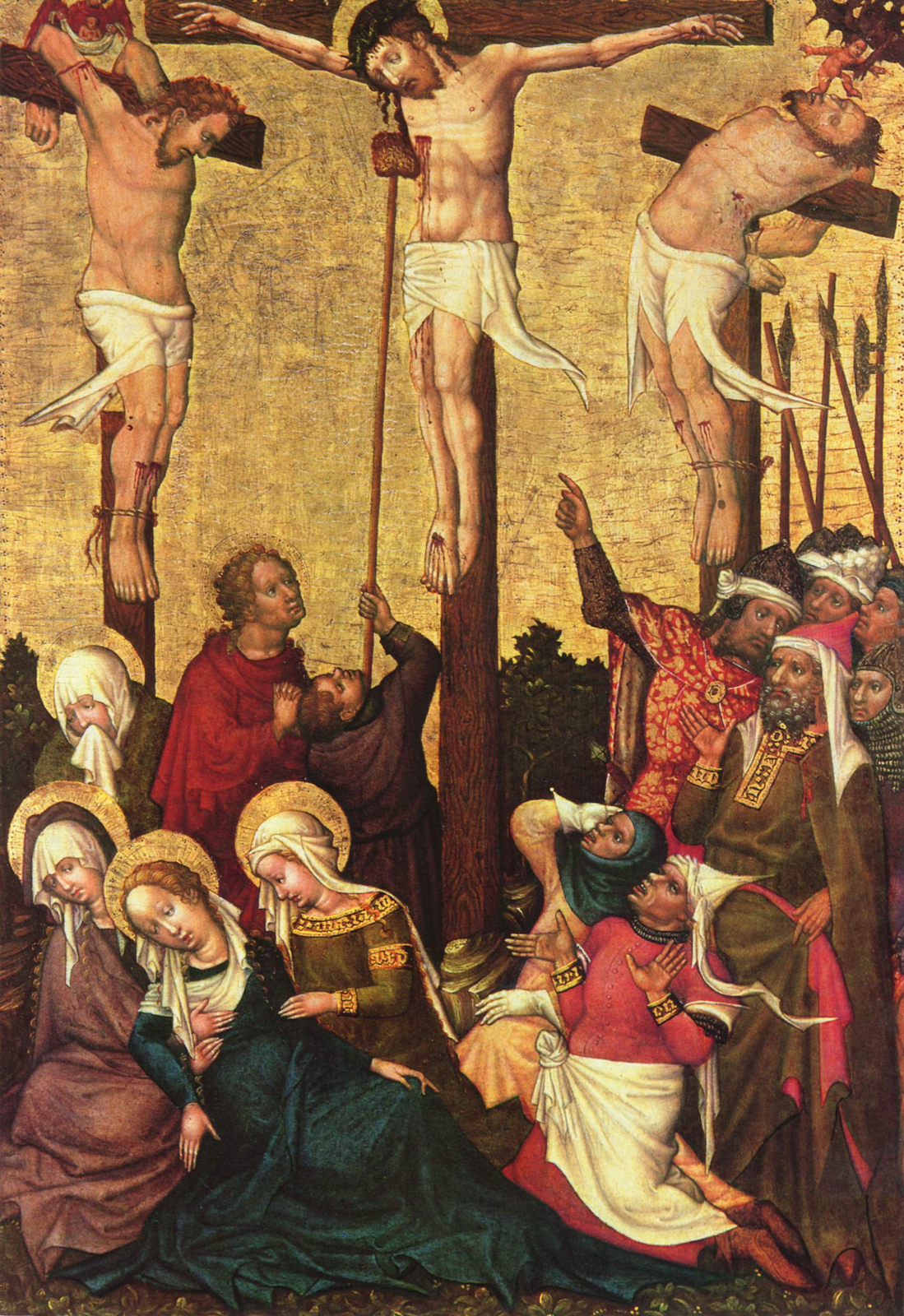
What about the Thief?

If you hold to the Christian doctrine that baptism saves and have ventured past your comfort zone, you have likely heard this oft-cited argument "WHAT ABOUT THE THIEF ON THE CROSS?!"

My first thought of course is

"What about the Thief?"

This simple innocuous statement is served up as a slam dunk argument by our sacramentarian friends. Within their paradigm, this simple statement carries the weight of the entirety of their theology against what the Scriptures clearly state on baptism. Which is of course nothing at all of any substance.

This flawed question is an argument from silence. Let's look at what the Scriptures tell us about the thief on the cross.


Matthew 27:38

Luke 23:32-43

Mark 15:27.

Then two robbers were crucified with him, one on the right and one on the left.

32 Two others, who were criminals, were led away to be put to death with him. 33 And when they came to the place that is called The Skull, there they crucified him, and the criminals, one on his right and one on his left.
...

39 One of the criminals who were hanged railed at him, saying, “Are you not the Christ? Save yourself and us!” 40 But the other rebuked him, saying, “Do you not fear God, since you are under the same sentence of condemnation? 41 And we indeed justly, for we are receiving the due reward of our deeds; but this man has done nothing wrong.” 42 And he said, “Jesus, remember me when you come into your kingdom.” 43 And he said to him, “Truly, I say to you, today you will be with me in paradise.”

And with him they crucified two robbers, one on his right and one on his left.


From the synoptic gospel, the Lukean narrative is the only one that expands beyond “two robbers” being crucified.


Without a thorough exegesis of the text, what can we take from a simple reading?

  1. There were two robbers.

  2. They were crucified in a place called The Skull (otherwise known as Golgotha)

  3. One of the criminals mocked Christ

    • This criminal seemed aware that he was called the Christ

  1. The other criminal rebuked the first criminal

    • Showed contrition

    • Showed knowledge of Christ and some of His works (as being just and innocent)

    • Showed faith in Christ

  1. Christ gave him a word of assurance and salvation


What we have here is a beautiful example of what salvation is for a penitent and contrite sinner. It is an assurance from our Lord. For the thief, it was a word of God from “The Word of God”. And the word of God never fails. What is that word from Jesus? “Truly, I say to you, today you will be with me in paradise.” This is a word of promise that can and should be believed because God’s word of grace saves sinners. In this situation, it was an unrighteous thief about to die.

Unfortunately, this wonderful example of salvation by grace through faith is used by our more radical friends to attack God’s Word regarding baptism. The very words that come from Christ in His Scripture are twisted and butchered when they say it doesn't mean it clearly says. Instead of believing the clear words of Scripture, our friends respond in the same way that ancient foe the Devil did by stating “Did God actually say.”

Now of course they would never claim God as a liar or His Word is wrong or contradictory. Which it isn't. This is a wonderful thing that Dr. Pieper has called A Felicitous Inconsistency. This is a term used and taught to his students to highlight that an individual's faith might sometimes be at odds with their public confession. For instance, the sacramentarians deny the true body and blood of Christ in the sacrament and they deny that baptism saves. Praise be to God that they are saved in light of this inconsistency.

Some of our Reformed friends will try to find a middle ground using Plato or other forms of human reason to say that it is His body and blood with the bread and wine, or that baptism does save, but when you push the concept, it always ends up meaning something contrary to the plain reading of Scripture. A plain reading that has been believed simply by the masses for the past two thousand years.


So ... what about the Thief?

I would say the same source of evidence that causes some to say the Thief was baptized, is used by others to say he was never baptized. And what is the source? None other than their imagination.

There is no source.

It is an argument from silence.


Not only is it a flawed argument, but it fails to use what we do know about the Thief and his circumstances. Let us look at a few things we know and don’t know.


We know:

  1. He was saved by a direct Word of God

  2. He was a sinner who was saved by grace

  3. He was saved before the formal institution of baptism in Matthew 28


We don’t know:

  1. If he was baptized

  2. Anything else about his life other than he was a thief 


So looking at these statements – why is this used as an argument so often? 

It is not only an argument from silence, but an argument from ignorance of the texts of the gospels, the life of Christ, the sacraments he gave us, and the basic sequential order of events. It is a wonderful example of God’s Word saving a sinner in Scripture. Yet they try and use an exception to make the rule.

Despite everything I have written here, our friends will still continue disbelieving the scriptures because they see these wonderful gifts to us from God as something we do rather than something we receive. Until they begin to believe that God has and does use means for saving His people, they will be left thinking it is something we do to add to salvation. We don’t add to the cross, we only receive by God’s Word, and sometimes with simple elements such as water, wine, and bread. The forgiveness of sins is so freely given to those who believe, and they can trust these elements because they are comprehended with God’s Word. And of course, God never lies.

Hopefully, you will allow the thief to rest in paradise rather than twisting his example of salvation by grace through faith.

12/26/21

Why I Am A Lutheran

I confess I have not written in a while. I am going through changes in my midlife, including my own personality. I tend to care much less about "ideas" now, and more about the real world. It is not my job to convince or persuade others of various religious, political, or philosophical views. So, why am I writing a post on why I am a Lutheran? 

Because Lutheranism is real world. It is not just an abstract idea.

THE REAL WORLD OF HUMAN SUFFERING

Very few people care about getting "ideas" right. Most people do not tend to live in their own heads. Instead, they experience the pain of real life. Marriages end in divorce. Loved ones die. Finances crumble. They lose their jobs. Disaster strikes. 

All of this is the result of sin. This world is unpredictable. We have no control, yet folks want something that will give them some form of assurance. They tend to turn to religion, among other things. 

But most of the time religion is not "real world." People who try different kinds of religion know that deep inside they are not "good." They know they try hard to be good, but deep down they know they keep failing. 

It doesn't matter even if they turn to a kind of Christianity. In fact, I have had friends leave Christianity because they said they knew they were not "good enough." Certainly they were hearing a perverted form of the gospel to think that. The Gospel is supposed to be Good News. But they were not hearing "Yes and Amen." They were hearing "yes, but."

When you compare every religion except Lutheranism, no matter the nuanced differences, you will find that at the end of the day they all amount to this "yes, but." "Saved by grace after all we can do." "Your good deeds must outweigh your bad." "Yes you were saved but now what are you doing for God?" "Yes you know you are saved if you are repenting enough and bearing enough fruit." Etc.

Sooner or later folks in those kinds of religions and even kinds of Christianity will either experience self-righteousness or despair. Pride or burnout. They will either be legalists or give up altogether. 

They must need something REAL.

THE REALITY OF OURSELVES

In truth, we all know that no matter how hard we try to be "good," that we are not. We may help the old lady across the street, but soon after our hearts try and pat us on the back and say "oh what a good boy/girl you are for doing that." We reason that we at least did not have sex with some person, even though we lusted after them. We reason that yes maybe we stole, but it was only ice cream. It is not like it was a sportscar. Yes, we may hate that person, but at least we did not kill them. Yes, maybe he killed six million, but he saw them to be merely vermin. Etc.

The sinful mind is professional with excuses. 

And many Christians are walking Pharisees.

In reality, even after we become Christians, deep down we know that we are at the same time saved and yet still sinful.

We know all the so-called "free will" in the world is only self-motivating and selfish.

We know we need constant assurance of forgiveness.

CHRIST COMES CONTINUALLY TO ASSURE US

For those who are aware of their sinfulness, of their wretchedness, of the selfishness that their false "free will" always leads to--they know they constantly need Jesus. They know they only need Jesus. 

They are not interested in an ecstatic "experience." They are not interested in "seeking God's secret will for my career path" or for "whom I should marry" or for seeking the (yet another!) "worship experience." 

No. 

In fact, they do not come to church to "give." Why?

Because they know they are only beggars.

WE ARE ALL BEGGARS

Beggars have nothing to give. They only kneel with their mouths open or their hands out.

And they respond in thankfulness to the One Who served them.

A beggar is in constant need.

And a beggar is taken care of by the One Who gives His Word, His Body, His Blood.

To receive forgiveness, and to eat and to drink for the forgiveness of sins, life, and salvation.

So why am I a Lutheran?

Because we are all beggars.

This is most certainly true.


7/19/21

Does baptism saves really mean baptism saves in 1 Peter 3:21?

Ways folks try to get around the words “baptism that now saves us” in 1 Peter 3:21.

1) They say the text says the water symbolizes baptism that now saves us, so they use that as “proof” that water baptism is symbolic of Spirit baptism (that is waterless in their view) that now saves us. But verse 20 shows that the water is Noah’s floodwater that verse 21 says is symbolic of baptism that now saves us.

2) They say that baptism saves not by removal of dirt from the body, but it is answer of good conscience so somehow that undo the part of baptism saving us. But no one argues by water in itself nor say that removing dirt from the body is what saves us. So erecting strawman doesn’t help their case, but undermines it. And where does the appeal of good conscience come from? According to the text, the resurrection of Christ. So the reason baptism saves us because by the resurrection of Christ done for us, it is answer of good conscience as God’s word and grace  to us, in Christ, not our word and work to God.

See Hebrews 10:22 which speaks of us having our hearts sprinkled from a guilty conscience at the moment our physical bodies are washed with pure water. Or Ephesians 5:26 saying Christ washes us with water through the Word, meaning it is His word of salvation that washes away our sins (see Acts 22:16), with water providing the visible means at that moment. Baptism isn’t water alone but God’s word of promise to save us in Christ alone joined to the water.  It is outward means of the Gospel of Christ alone to save us offered unto us, by grace which faith receives.

3) They say that baptism is a work we do to give answer of good conscience, and our work don’t save us, so there pit the text against itself since the first half of it says baptism now saves us. Also, in trying to preserve justification by faith alone in their own minds, they actually undermine it with that argument, since no amount of good work we do can ever give us a good conscience before God. They can only come from God (again see Hebrews 10:22). Justification by faith alone is predicated on the idea that we can’t make ourselves right with God by anything we do. By making baptism something we do for answer of good conscience, they unwittingly undermine that. The text stands. Baptism saves. It comes from God entirely. It doesn’t undermine faith alone to say that, but backs it.

Here we stand.

4/26/21

FORGIVENESS WINS.

  I am concerned with pscyho-babble and false "therapy" that says you do not have to forgive those who have wronged you. Not only is this completely unbiblical, it is spiritually dangerous. To forgive does not mean you forget, but it does mean you do not bring it up again. I am not saying forgiveness is easy, but we have all been forgiven of the greatest crime of all--we killed the Son of God. And yet the Father forgave us for that. We have been forgiven of the greatest debt, so we dare not require the debt that is small from others. 

The parable of the unmerciful servant is very key here. 

Forgive Hitler. Forgive women. Forgive men. Forgive cops. Forgive white men. Forgive feminists. Forgive everyone. 

Yes, even the one who wronged you.

Because Jesus forgave you.

3/5/21

Response to the Ken Wilson interview done by Leighton Flowers Part 2: Irenaeus, Clement of Alexandria, and Tertullian debating Manichaeans and rejecting baptismal regeneration?

 Some of Ken Wilson’s errors are comical. In his interview with Leighton Flowers (at the 18:36 mark), he said Irenaeus, Clement of Alexandria, and Tertullian argued against Stoics, Gnostics and Manichaeans. There’s just one problem in regards to the Manichaeans:

Irenaeus (203 AD)  and Clement of Alexandria (between 211 and 215 AD) died before Mani (founder of the Manichaeans) was even born (216 AD). And Tertullian died (around past 220 AD) at the time Mani was an infant.

The interview can be found here: 

https://youtu.be/BnOMORGM2Qw

(Similarly in his dissertation, he asserted that Origen’s First Principles scoffed at the Manichaeans (and Gnostics). The problem? That was written around 231 AD at the latest. Manichaeanism wasn’t founded until 242 AD.)

This came after minutes earlier, Wilson claimed that Augustine came up with baptismal regeneration and salvation (regardless of his denials of him saying that in follow-up interview with Flowers), as a result of him reverting back to his old “pagan” (as in Gnostic, Manichaean, etc.) views, whereas prior church fathers didn’t hold to it (see 9:59-10:04 mark).

The irony is that all the above church fathers mentioned explicitly affirmed baptismal regeneration and salvation, and both Irenaeus and Tertullian argued against Gnostics on that very issue.

Irenaeus’ Against Heresies Book 1 Chapter 21 anathematized the Gnostics for rejecting baptismal regeneration: “And when we come to refute them, we shall show in its fitting-place, that this class of men have been instigated by Satan to a denial of that baptism which is regeneration to God, and thus to a renunciation of the whole [Christian] faith.”

This same church father also wrote in the same writing, Book II, Chapter 22, of such regeneration being for infants as well: “For He came to save all through means of Himself — all, I say, who through Him are born again to God — infants, and children, and boys, and youths, and old men.”

Likewise, he wrote in Fragment 34: 

“ ‘And dipped himself,’ says [the Scripture], ‘seven times in Jordan.’ 2 Kings 5:14 It was not for nothing that Naaman of old, when suffering from leprosy, was purified upon his being baptized, but [it served] as an indication to us. For as we are lepers in sin, we are made clean, by means of the sacred water and the invocation of the Lord, from our old transgressions; being spiritually regenerated as new-born babes, even as the Lord has declared: ‘Unless a man be born again through water and the Spirit, he shall not enter into the kingdom of heaven.’ John 3:5

Note, he affirmed not only baptismal regeneration but also for infants (refuting Wilson’s claims in his interview- at 7:42 mark- and writings of infant baptism was practiced early on in local areas for reasons no one knew then) and with John 3:5 view of it (refuting Wilson’s claims in especially his dissertation as well as his shorter writing that Augustine invented baptismal regeneration view of John 3:5, in place of physical birth for water, as well as view of its application to infant baptism).  

And the bishop of Lyons affirmed baptismal regeneration in his Demonstration of Apostolic Preaching as well:

“First of all it bids us bear in mind that we have received baptism for the remission of sins, in the name of God the Father, and in the name of Jesus Christ, the Son of God, who was incarnate and died and rose again, and in the Holy Spirit of God. And that this baptism is the seal of eternal life, and is the new birth unto God, that we should no longer be the sons of mortal men, but of the eternal and perpetual God; and that what is everlasting and continuing is made God; and is over all things that are made, and all things are put under Him; |and all the things that are put under Him are made His own; for God is not ruler and Lord over the things of another, but over His own; and all things are God's; and therefore God is Almighty, and all things are of God.”

Tertullian also argued against Gnostics in defense of baptismal regeneration. In chapter 1 of On Baptism, he wrote:

“Happy is our sacrament of water, in that, by washing away the sins of our early blindness, we are set free and admitted into eternal life! A treatise on this matter will not be superfluous; instructing not only such as are just becoming formed (in the faith), but them who, content with having simply believed, without full examination of the grounds of the traditions, carry (in mind), through ignorance, an untried though probable faith. The consequence is, that a viper of the Cainite heresy, lately conversant in this quarter, has carried away a great number with her most venomous doctrine, making it her first aim to destroy baptism.”

Likewise, he wrote in response to Gnostics in Against Marcion, Book I, Chapter 28:

“And what will happen to him after he is cast away? He will, they say, be thrown into the Creator's fire. Then has no remedial provision been made (by their god) for the purpose of banishing those that sin against him, without resorting to the cruel measure of delivering them over to the Creator? And what will the Creator then do? I suppose He will prepare for them a hell doubly charged with brimstone, as for blasphemers against Himself; except indeed their god in his zeal, as perhaps might happen, should show clemency to his rival's revolted subjects. Oh, what a god is this! everywhere perverse; nowhere rational; in all cases vain; and therefore a nonentity! — in whose state, and condition, and nature, and every appointment, I see no coherence and consistency; no, not even in the very sacrament of his faith! For what end does baptism serve, according to him? If the remission of sins, how will he make it evident that he remits sins, when he affords no evidence that he retains them? Because he would retain them, if he performed the functions of a judge. If deliverance from death, how could he deliver from death, who has not delivered to death? For he must have delivered the sinner to death, if he had from the beginning condemned sin. If the regeneration of man, how can he regenerate, who has never generated? For the repetition of an act is impossible to him, by whom nothing any time has been ever done. If the bestowal of the Holy Ghost, how will he bestow the Spirit, who did not at first impart the life? For the life is in a sense the supplement of the Spirit. He therefore seals man, who had never been unsealed in respect of him; washes man, who had never been defiled so far as he was concerned; and into this sacrament of salvation wholly plunges that flesh which is beyond the pale of salvation! No farmer will irrigate ground that will yield him no fruit in return, except he be as stupid as Marcion's god. Why then impose sanctity upon our most infirm and most unworthy flesh, either as a burden or as a glory? What shall I say, too, of the uselessness of a discipline which sanctifies what is already sanctified? Why burden the infirm, or glorify the unworthy? Why not remunerate with salvation what it burdens or else glorifies? Why keep back from a work its due reward, by not recompensing the flesh with salvation? Why even permit the honour of sanctity in it to die?”

See this article for further details on Tertullian’s views of baptismal regeneration and salvation, infant baptism, John 3:5 as baptism regeneration text and original sin in response to Wilson’s interview with Flowers:

https://g2witt.blogspot.com/2020/12/response-to-ken-wilson-interview-done.html?m=1

 So when it comes to the issue of baptismal regeneration and salvation, the pre-Augustine church fathers weren’t on Wilson’s side. Much less is it real history to claim Augustine got it from Gnosticism when Gnostics were the ones who opposed baptismal regeneration and salvation prior to him. Wilson’s denials of baptismal salvation and regeneration are the novelties here, and many centuries after Augustine. That is if we don’t count Gnostics.

To further highlight this point of all three early Christians mentioned by Wilson to Flowers affirming baptismal salvation and regeneration, here’s Clement of Alexandria’s The Instructor Book 1 Chapter 12:

“The view I take is, that He Himself formed man of the dust, and regenerated him by water; and made him grow by his Spirit; and trained him by His word to adoption and salvation, directing him by sacred precepts; in order that, transforming earth-born man into a holy and heavenly being by His advent.”

So, yes, he was right in the interview that those three were arguing against Gnostics. But baptismal regeneration is not the issue Wilson honestly should be appealing to them on. Nor make spurious claims that Augustine came up with baptismal regeneration and salvation out of Gnosticism.

And same holds true as well for Origen since Wilson used him the same way as he did those other three (even in regards to falsely claiming he scoffed at Manichaeans in a writing before they were even around). He also held to baptismal regeneration as one can see here in his Commentary on the Gospel of John, Book VI: 

“These, then, are the parallel passages of the four; let us try to see as clearly as we can what is the purport of each and wherein they differ from each other. And we will begin with Matthew, who is reported by tradition to have published his Gospel before the others, to the Hebrews, those, namely, of the circumcision who believed. I, he says, baptize you with water unto repentance, purifying you, as it were, and turning you away from evil courses and calling you to repentance; for I have come to make ready for the Lord a people prepared for Him, and by my baptism of repentance to prepare the ground for Him who is to come after me, and who will thus benefit you much more effectively and powerfully than my strength could. For His baptism is not that of the body only; He fills the penitent with the Holy Ghost, and His diviner fire does away with everything material and consumes everything that is earthy, not only from him who admits it to his life, but even from him who hears of it from those who have it. So much stronger than I is He who is coming after me, that I am not able to bear even the outskirts of the powers round Him which are furthest from Him (they are not open and exposed, so that any one could see them), nor even to bear those who support them. I know not of which I should speak. Should I speak of my own great weakness, which is not able to bear even these things about Christ which in comparison with the greater things in Him are least, or should I speak of His transcendent Deity, greater than all the world? If I who have received such grace, as to be thought worthy of prophecy predicting my arrival in this human life, in the words, The voice of one crying in the wilderness, and Behold I send my messenger before your face; if I whose birth Gabriel who stands before God announced to my father so advanced in years, so much against his expectation, I at whose name Zacharias recovered his voice and was enabled to use it to prophesy, I to whom my Lord bears witness that among them that are born of women there is none greater than I, I am not able so much as to bear His shoes! And if not His shoes, what can be said about His garments? Who is so great as to be able to guard His coat? Who can suppose that He can understand the meaning contained in His tunic which is without seam from the top because it is woven throughout? It is to be observed that while the four represent John as declaring himself to have come to baptize with water, Matthew alone adds the words to repentance, teaching that the benefit of baptism is connected with the intention of the baptized person; to him who repents it is salutary, but to him who comes to it without repentance it will turn to greater condemnation. And here we must note that as the wonderful works done by the Saviour in the cures He wrought, which are symbolic of those who at any time are set free by the word of God from any sickness or disease, though they were done to the body and brought a bodily relief, yet also called those who were benefited by them to an exercise of faith, so the washing with water which is symbolic of the soul cleansing herself from every stain of wickedness, is no less in itself to him who yields himself to the divine power of the invocation of the Adorable Trinity, the beginning and source of divine gifts; for there are diversities of gifts. This view receives confirmation from the narrative recorded in the Acts of the Apostles, which shows the Spirit to have descended so manifestly on those who receive baptism, after the water had prepared the way for him in those who properly approached the rite. Simon Magus, astonished at what he saw, desired to receive from Peter this gift, but though it was a good thing he desired, he thought to attain it by the mammon of unrighteousness. We next remark in passing that the baptism of John was inferior to the baptism of Jesus which was given through His disciples. Those persons in the Acts Acts 19:2 who were baptized to John's baptism and who had not heard if there was any Holy Ghost are baptized over again by the Apostle. Regeneration did not take place with John, but with Jesus through His disciples it does so, and what is called the laver of regeneration takes place with renewal of the Spirit; for the Spirit now comes in addition since it comes from God and is over and above the water and does not come to all after the water. So far, then, our examination of the statements in the Gospel according to Matthew.”

And two of Origen’s works refute the claim that no one then knew why infant baptism was practiced. One was Romans 5.9 commentary:

“Was a newly born child able to sin? And yet it has a sin for which sacrifices are commanded to be offered, and from which it is denied that anyone is pure, even if his life should be a day long. It has to be believed, therefore, that concerning this David also said what we recorded above, ‘in sins my mother conceived me.’ For according to the historical narrative no sin of his mother is declared. It is on this account as well that the Church has received the tradition from the apostles to give baptism to even little children. For they to whom the secrets of the divine mysteries were committed were aware in everyone was sin’s innate defilement, which needed to be washed away through water and the Spirit.”

The other is Leviticus 8.3 Homily:

“But if it pleases you to hear what other saints also might think about this birthday, hear David speaking, ‘In iniquity I was conceived and in my sins my mother brought me forth,’ showing every soul which is born in flesh is polluted by the filth ‘of iniquity of sin’; and for this reason we can say what we already have recalled above, ‘No one is pure from uncleanness even if his life is only one day long.’ To these things can be added the reason why it is required, since the baptism is given for the forgiveness of sins, that, according, to the observance of the Church, that baptism also be given to infants; since, certainly, if there were nothing in infants that ought to pertain to forgiveness and indulgence, then the grace of baptism would appear superflous.”

Wilson would know that there were explanations for why infant baptism was practiced then since he claimed both writings denied Psalm 51:5 refers to sin guilt at birth that needs forgiveness at baptism (falsely as seen here). Such claims can be found in both his published dissertation book (page 70) and the shorter writing (page 69 footnote) based off that. Yet, he claimed at various times in his dissertation, interview and shorter book that no one, not even Augustine, knew why infant baptism was practiced prior to Augustine making up reasons out of Manichaeanism and Gnosticism after 411 AD according to Wilson).

All so he can push the false narrative as he did that pre-Augustine church fathers’ and Orr-412 AD Augustine’s free choice view required rejecting baptism for salvation on page 120 of his dissertation book), on top of his Manichaean Gnostic and Augustine novelty cards on baptismal salvation and regeneration, especially of infants.

So here’s an idea: when Wilson (at the 15:41 mark) make the statement that Augustine was more into polemics than being a student of Scriptures, maybe he ought to reconsider his own polemical methodology that is filled with blatant inaccuracies just so he can grind his axe against Augustine and baptismal and sacramental theologies in general. Glasshouses and all. Just a thought.

Here we stand.